sábado, 28 de febrero de 2015

CDC News and Highlights (Influenza): Avian Influenza, Disease Burden, ACIP Recommendations, Antivirals

CDC News and Highlights (Influenza): Avian Influenza, Disease Burden, ACIP Recommendations, Antivirals

CDC


What's New?

Weekly U.S. Influenza Surveillance Report | Seasonal Influenza (Flu) | CDC

Weekly U.S. Influenza Surveillance Report | Seasonal Influenza (Flu) | CDC

FluView: A Weekly Influenza Surveillance Report Prepared by the Influenza Division


Flu activity is still elevated in the United States but is declining. It is possible, however, that flu activity will continue for several weeks in parts of the country.
While H3N2 viruses remain most common, an increase in influenza B viruses has been detected in some parts of the country. This season has been severe for people 65 years and older [147 KB, 2 pages], with very high hospitalization rates being recorded.
Influenza antiviral drugs can treat flu illness. CDC recommends these drugs be used to treat people who are very sick or who are at high risk of serious flu-related complications who have flu symptoms. Early antiviral treatment works best.
Learn More!

Advisory Committee on Immunization Practices (ACIP) reaffirms recommendation for annual influenza vaccination | CDC Online Newsroom | CDC

Advisory Committee on Immunization Practices (ACIP) reaffirms recommendation for annual influenza vaccination | CDC Online Newsroom | CDC

CDC. Centers for Disease Control and Prevention. CDC 24/7: Saving Lives. Protecting People.


Advisory Committee on Immunization Practices (ACIP) reaffirms recommendation for annual influenza vaccination

No stated preference for nasal spray vaccine or flu shot expressed


Media Statement

For Immediate Release: Thursday, February 26, 2015
Contact: Media Relations,
(404) 639-3286
Today the Advisory Committee on Immunization Practices (ACIP) voted on its annual influenza vaccine recommendations for 2015-2016. ACIP voted to continue to recommend that all persons 6 months and older be vaccinated annually against influenza. However ACIP did not renew the 2014-2015 preference for using the nasal spray flu vaccine (i.e., LAIV) instead of the flu shot (i.e., IIV) in healthy children 2 through 8 years of age when immediately available. The preferential recommendation was originally approved on June 25, 2014, after a review of data from several influenza seasons suggested that the nasal spray vaccine could offer better protection than the flu shot for children in this age group. The decision not to renew the preferential recommendation was made based on new data from more recent seasons which have not confirmed superior effectiveness of LAIV observed in earlier studies. ACIP recommends that children 6 months and older get an annual influenza vaccine with no preference stated for either the nasal spray vaccine or the flu shot.
ACIP is a panel of immunization experts that advises the Centers for Disease Control and Prevention (CDC). Part of the ACIP charter is to continually evaluate new data and update or change recommendations as warranted. The new data considered by ACIP included vaccine effectiveness (VE) estimates for 2013-2014 and for the current 2014-2015 season.
2013-2014: On October 29, 2014, VE data for the 2013-2014 season were presented to ACIP. These data showed no measurable effectiveness for LAIV against influenza A (H1N1) among children while the IIV vaccine effectiveness mid-point estimate against H1N1 in children 2 through 8 years that season was 60% and was statistically significant. H1N1 was the predominant virus in circulation during the 2013-2014 season for the first time since it emerged in 2009 to cause a pandemic.
2014-2015: Today, interim data from the U.S. Flu VE Network was presented to ACIP. The mid-point vaccine effectiveness estimate for IIV against H3N2 in children ages 2 through 8 years was 15% (95% confidence interval of -20 to 40) and for LAIV it was -23% (95% confidence interval of -90 to 21) These data suggest that neither vaccine worked well in protecting against H3N2 viruses this season, and that LAIV did not work better than IIV against the predominant H3N2 viruses circulating during the current season. Limited data are available on LAIV effectiveness against drifted H3N2 viruses, but some past studies had suggested that LAIV might offer better protection against such viruses.[1]
Since 2010, CDC and ACIP have recommended that everyone 6 months and older get a flu vaccine annually with rare exception. Although flu vaccine is the best way to prevent influenza infection, how well it works can vary. Since CDC began measuring vaccine effectiveness in 2004-2005, estimates have ranged from 10% to 60%. One factor that can influence how well the vaccine works is the similarity between the vaccine viruses and circulating influenza viruses. More than two-thirds of the H3N2 viruses circulating nationally in the U.S. this season are different from the H3N2 vaccine virus; the proportion of drifted viruses is higher (>80%) at the U.S. VE Network study sites. Host factors of the person being vaccinated like age, health and immune status also can impact how well the vaccine works.
The ACIP recommendation must be adopted by the CDC Director. The recommendation would then be incorporated into the 2015-2016 influenza prevention and control recommendations and published in a Morbidity and Mortality Weekly Report (MMWR), at which point it would become official CDC policy.


[1] Two of five randomized control trials (RCTs) conducted during seasons when drifted H3N2 viruses circulated reported good protection by LAIV against those viruses and one suggested LAIV offered more protection that IIV. 

Flu Antivirals Drugs continue to be Under-utilized in High-Risk Patients | News (Flu) | CDC

Flu Antivirals Drugs continue to be Under-utilized in High-Risk Patients | News (Flu) | CDC


CDC. Centers for Disease Control and Prevention. CDC 24/7: Saving Lives. Protecting People.


Flu Antivirals Drugs continue to be Under-utilized in High-Risk Patients


Clinicians and high-risk patients can help increase the use of flu antiviral drugs
A study by CDC authors published today in the journal Clinical Infectious Diseases showed that only 15 percent of patients at high risk for flu complications with an acute respiratory illness who sought medical care within two days of symptom onset received a prescription for influenza antiviral medications. This study underscores the fact that antiviral drugs are severely underutilized in high-risk patients in outpatient settings.
Certain people—including children younger than 2 years old, adults aged 65 years and older, pregnant women, and people with chronic health conditions, like heart disease, diabetes, and lung disease—are at higher risk of developing serious flu complications. Observational studies have shown that influenza antiviral drugs can reduce serious flu complications, including hospitalization and death. CDC recommends empiric antiviral treatment as soon as possible for all severely ill and high-risk patients with suspected influenza without waiting for the results of diagnostic tests. Ideally treatment should begin within 48 hours of symptom onset, but studies have shown that treatment administered later can still be helpful.
This new research suggests there are two main barriers to patients treated with an antiviral as recommended. One, high-risk patients often wait until after two days of symptom onset to seek care and, two, even when high-risk patients present early, clinicians fail to prescribe antivirals.
In this study, 70 percent of high-risk patients presented for care more than two days after onset of symptoms. Adults 65 years and older were the least likely to seek care early (25 percent), while pregnant women (41 percent) and children younger than 2 years old (37 percent) were most likely to present for care within 48 hours.
However, even when patients presented for care early, only 15 percent of high-risk patients with acute respiratory illness in this study who visited a doctor early received flu antivirals. Though antiviral prescriptions increased to 43 percent among high-risk patients presenting to care within 48 hours who had laboratory-confirmed influenza, many high-risk patients who may have benefited from antiviral treatment were not prescribed these medications. (All patients were tested for influenza as part of the study, but most clinicians did not have access to influenza test results.)
Additionally, current levels of flu activity impacted antiviral prescribing practices. During the week of peak flu activity in the study, the proportion of high-risk patients seeking early care who got an antiviral prescription increased to 31 percent, which was about twice as high compared with the proportion of antivirals prescribed during all other weeks. However, even at the peak of influenza season, a substantial proportion (42 percent) of high-risk patients who sought care early and had laboratory-confirmed influenza were not prescribed an antiviral medication.
Clinicians can educate their high-risk patients about seeking prompt treatment when they develop flu-like symptoms and may consider offering access to antiviral treatment through telephone triage lines where prescriptions can be given over the phone. (See CDC’s Medical Office Telephone Evaluation tool, which can be used to help medical office staff triage calls from patients with flu-like symptoms.)
The currently recommended influenza antiviral drugs—oseltamivir, zanamivir and peramivir—are the only influenza-specific therapy approved by FDA with activity against circulating influenza viruses. So far this flu season, about two-thirds of circulating influenza A (H3N2) viruses have not been well-matched to the H3N2 vaccine virus, and vaccine effectiveness is reduced. Thus, prompt antiviral treatment for recommended persons is especially important during the current influenza season.
The article is available in the journal Clinical Infectious Diseases.

New CDC study highlights burden of pneumonia hospitalizations on U.S. children | CDC Online Newsroom | CDC

New CDC study highlights burden of pneumonia hospitalizations on U.S. children | CDC Online Newsroom | CDC


CDC. Centers for Disease Control and Prevention. CDC 24/7: Saving Lives. Protecting People.


New CDC study highlights burden of pneumonia hospitalizations on U.S. children

Press Release

Embargoed until: Wednesday, February 25, 2015, 5:00 pm ET
Contact: Media Relations
(404) 639-3286
Children younger than 5 years of age accounted for 70 percent of pneumonia hospitalizations among children, the Centers for Disease Control and Prevention reported in a study published today. Pneumonia remains a leading cause of hospitalization among children in the United States. The two-and-a-half-year study published in the New England Journal of Medicine by CDC researchers and three U.S. children’s medical centers estimated the burden of community-acquired pneumonia hospitalizations among U.S. children. Researchers also found that respiratory viruses, rather than bacterial pathogens, were most commonly detected in children hospitalized with pneumonia.
“Pneumonia puts thousands of young children in the hospital each year at a cost in the U.S. of about $1 billion, not to mention suffering of kids and hardship for their families,” said CDC Director Tom Frieden, M.D. M.P.H.  “This ground-breaking study shows how badly we need faster, less-expensive diagnostic tests for doctors to accurately diagnose the cause of pneumonia so they can effectively treat it.”
“The data gathered from this study add to the evidence base that respiratory virus infections lead to pneumonia hospitalizations and complications in children,” said Dr. Seema Jain, lead author of the paper and a medical epidemiologist in CDC’s Influenza Division. “We hope this provides incentive for the continued and future development of effective treatments and vaccines against pathogens that don’t have such countermeasures available. It also highlights the importance of using existing treatments and vaccines, such as those against pneumococcus and influenza.”
The CDC Etiology of Pneumonia in the Community (EPIC) study sought to address gaps in knowledge about pneumonia in children by providing estimates of the incidence of community-acquired pneumonia hospitalizations in U.S. children. Children in the study were enrolled from January 2010 to June 2012 in three U.S. children’s hospitals in Memphis, Nashville, and Salt Lake City. Study staff tested children using a range of laboratory tests for viral and bacterial respiratory pathogen detection.
During the study period, the EPIC study team enrolled 2,638 children, of which 2,358 (89 percent) had radiographically-confirmed pneumonia. The median age of children in the study was 2 years old. Intensive care was required for 497 (21 percent) of the children, and three children died.  Among 2,222 children with radiographic pneumonia and specimens available for both bacterial and viral testing, a pathogen was detected in 1802 (81 percent) children. One or more viruses were detected in 1,472 (66 percent) of these children. Bacteria were detected in 175 (8 percent), and bacterial and viral co-detection occurred in 155 (7 percent).
The study estimated that annual pneumonia incidence was 15.7/10,000 children during the study period.  The highest incidence was among children younger than 2 years old (62.2/10,000). Respiratory syncytial virus (RSV) was the most common (28 percent) pathogen detected, and it was associated with the highest incidence among children younger than 2 years old with pneumonia.
Human rhinovirus was detected in 22 percent of cases, but it also was identified in 17 percent of asymptomatic controls who were enrolled, by convenience sample, at the same sites during the same period. This makes it challenging to interpret the meaning of human rhinovirus detection in children hospitalized with pneumonia.
Other detected viral pathogens included:
  • human metapneumovirus (13 percent),
  • adenovirus (11 percent), parainfluenza viruses (7 percent),
  • influenza (7 percent), and
  • coronaviruses (5 percent). 
Bacterial pathogens detected included:
  • Mycoplasma pneumoniae (8 percent),
  • Streptococcus pneumoniae (4 percent),
  • Staphylococcus aureus (1 percent), and
  • Streptococcus pyogenes (<1 percent).
Several viruses were more commonly detected in children younger than 5 years of age compared with older children. Respiratory syncytial virus (RSV) was found in 37 percent of children with pneumonia younger than 5 years old compared with 8 percent in older children. Likewise, adenovirus was found in 15 percent versus 3 percent and human metapneumovirus was found in 15 percent versus 8 percent of children younger than 5 years old compared with older children. In contrast, Mycoplasma pneumoniae was less commonly detected in children younger than 5 years of age compared with older children (3 percent versus 19 percent).
Although bacteria were less commonly detected, the authors note that the study results reflect the success of widespread bacterial conjugate vaccination in the United States in substantially reducing previously common bacterial infections like pneumococcal and Haemophilus influenzae type B disease. However, currently available bacterial diagnostics have limited sensitivity, particularly in children. In the absence of a recognized, common standard for bacterial pathogen detection in pneumonia, the EPIC study findings, which are based on current state-of-the-art diagnostics, suggest that the incidence of bacterial pneumonia is lower than previously reported. 
This study was published in theNew England Journal of Medicine on February 26, 2015, and is available online athttp://www.nejm.org/doi/full/10.1056/NEJMoa1405870
CDC has launched a new website that provides an overview of the EPIC study’s scope and purpose and will provide links to all future publications based on EPIC data. It is available at www.cdc.gov/pneumonia/epic/.  

Avian Flu Update: H5 Viruses Detected Among U.S. Domestic and Wild Birds | News (Flu) | CDC

Avian Flu Update: H5 Viruses Detected Among U.S. Domestic and Wild Birds | News (Flu) | CDC


CDC. Centers for Disease Control and Prevention. CDC 24/7: Saving Lives. Protecting People.


Avian Flu Update: H5 Viruses Detected Among U.S. Domestic and Wild Birds


Recent detections of highly pathogenic avian influenza H5 infections in U.S. domestic and wild birds pose a low risk to human health at this time according to the Centers for Disease Control and Prevention. In December 2014, the United States Department of Agriculture (USDA) first detected H5 avian viruses in wild birds in Washington state. Since that time, additional infections in birds with highly pathogenic avian influenza A H5N2, H5N8 viruses and with a newly identified H5N1 virus have been reported in the western states of California, Idaho, Oregon, Utah, Washington and Nevada. No human infections with these viruses have been reported to date.
Avian influenza (Bird flu) is a viral disease of birds. Migratory waterfowl and shore birds may carry avian influenza viruses that do not usually make them sick. Avian influenza viruses can be classified as either “low pathogenic” avian influenza viruses or “highly pathogenic” avian influenza viruses (HPAI), based on molecular characteristics and the ability of the virus to cause disease in birds. HPAI viruses can cause severe illness and death in birds, particularly in domestic poultry.
In general human infections with avian influenza viruses are rare and most often occur after people are in direct or close contact with an infected bird. Illnesses in humans from avian influenza virus infections have ranged in severity from mild to severe.
While no human infections with these HPAI H5N8, H5N2, or this new H5N1 virus have been reported worldwide, similar viruses (like Asian-origin H5N1, for example) have infected people in the past. The H5N1 virus recently isolated from a U.S. wild bird is a new mixed-origin virus (a reassortant) that is genetically different from the Asian-origin avian H5N1 viruses that have caused human infections with high mortality.
CDC is communicating and coordinating with state health departments on appropriate human health measures and is working with animal health colleagues to evaluate and minimize public health risk. The risk to people from these HPAI H5 infections in U.S. birds and poultry is believed to be low at this time because these viruses do not normally infect humans easily, and even if a person is infected, the viruses do not spread easily to other people. People in contact with known infected or possibly infected birds should take precautions to protect against infection. In addition, CDC has developedtesting and influenza antiviral prophylaxis guidance for persons exposed to birds possibly infected with HPAI H5 viruses.
Because avian influenza A viruses have the potential to change and gain the ability to spread easily among people, monitoring for human infection and person-to-person transmission is extremely important for public health.
CDC continues to monitor this situation to minimize the risk to people and will provided updated information as it becomes available.
For more information about avian influenza visit the CDC avian flu web site and the USDA ARS and Animal and Plant Health Inspection Service (APHIS) websites.
The U.S. Department of Interior (DOI) and the USDA are the lead federal agencies for outbreak investigation and control in wild birds and the USDA APHIS is the lead agency for such activities in domestic birds. The latest information on avian influenza findings in the Pacific Flyway is available onUSDA’s website.

Disease Burden of Influenza | Seasonal Influenza (Flu) | CDC

Disease Burden of Influenza | Seasonal Influenza (Flu) | CDC


CDC. Centers for Disease Control and Prevention. CDC 24/7: Saving Lives. Protecting People.

Disease Burden of Influenza


The severity of influenza disease in the United States can vary widely and is determined by a number of things including the characteristics of circulating viruses, the timing of the season, how well the vaccine is working to protect against illness, and how many people got vaccinated. CDC tracks severity principally through its national Influenza Surveillance System that monitors key indicators like the percentage of deaths resulting from pneumonia or influenza, rates of influenza-associated hospitalizations, pediatric deaths and the percentage of visits to outpatient clinics for influenza-like illness. In addition to using surveillance data, CDC uses mathematical models to fill in the picture of the disease burden and the impact of influenza immunization programs. Models are used to augment surveillance because most of the surveillance systems only look at portions of the U.S. population and in some cases there can be significant under-reporting of influenza deaths and hospitalizations. This page includes links to key resources on the burden of influenza.

Flu-related Illness and Hospitalization

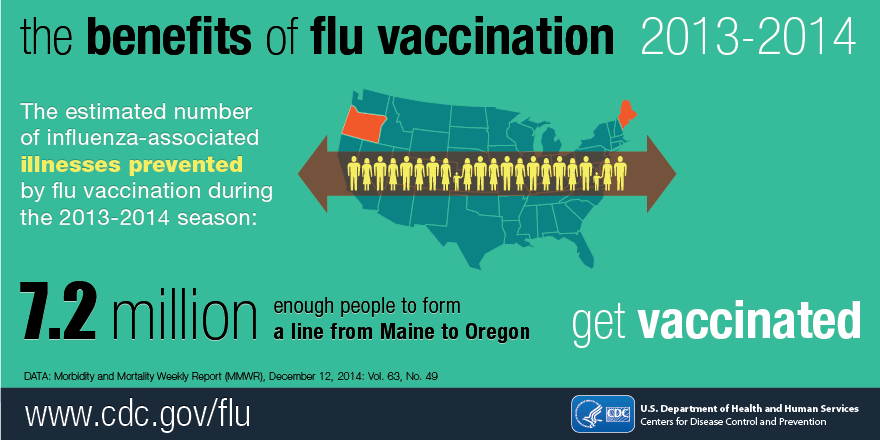
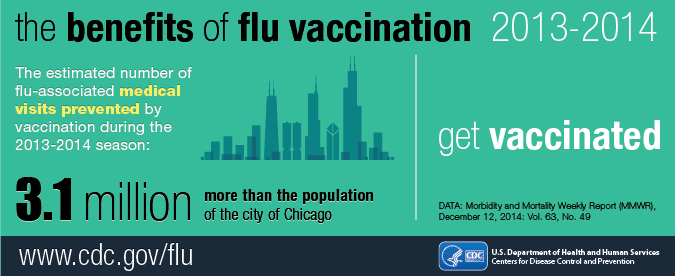
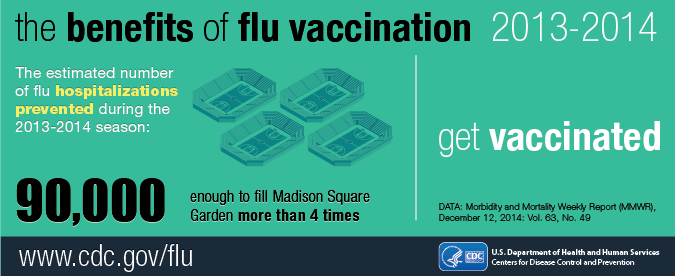
Flu-related illness and hospitalization averted by vaccination
2013-2014 season
2012-2013 season
2005-2011 seasons

Economic Impact of Influenza

Infographics