viernes, 31 de marzo de 2017

Ivanhoe's Top 5 Reports This Week

Marketing

March 31, 2017

ST. LOUIS, Mo. (Ivanhoe Newswire) — About 75 percent of all Americans will experience back pain at some point in their lives; for those with serious, chronic pain, finding relief can be a challenge. A new implantable device is bringing quick relief to patients who have exhausted other options.


SUMMIT, N.J. (Ivanhoe Newswire) — As many as 78,000 Americans will be diagnosed with a brain tumor this year.  If those tumors return after surgery, immunotherapy may be an option. It’s a treatment that revs up the body’s immune response to fight the cancer.


Cataract Surgery 2.0 (2nd week)


ST. LOUIS, Mo. (Ivanhoe Newswire) — As many as three and a half million Americans will have cataract surgery this year. Most of the time, surgery fixes the problem, but for three percent of the patients there is a surgical side effect that does not go away on its own. For those patients, eye surgeons at Washington University in St. Louis have devised a cutting-edge way to restore clear vision.


TAMPA, Fla. (Ivanhoe Newswire) — A new form of immunotherapy is being called a milestone in cancer treatment. Could this be the big break patients have been waiting for?


TAMPA, Fla. (Ivanhoe Newswire) — Breast cancer is the second most common cancer in American women. More than 300,000 women will be diagnosed this year. Researchers are working on a vaccine that could lead to prevention.

Wanda Whitney—Librarian and Parent | NLM in Focus

Wanda Whitney—Librarian and Parent | NLM in Focus

NLM in Focus Banner


03/30/2017 07:35 AM EDT


This story is a part of our weeklong series on reference librarians at the National Library of Medicine. Tomorrow we’ll tell you about some of the more unusual requests that NLM reference librarians have received. Wanda Whitney, PhD, was desperate. “My baby was having seizures and I didn’t know why. I went online and read forums…

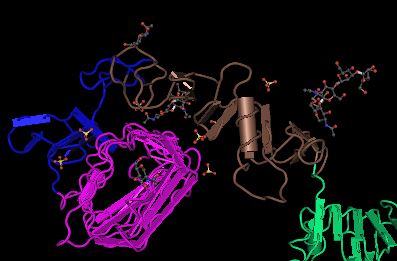
Conserved Domain Database (CDD) version 3.16 now available online and via FTP

Conserved Domain Database (CDD) version 3.16 now available online and via FTP

National Institutes of Health, U.S. National Library of Medicine


cdd domain

Type 1 Insulin-like Growth Factor Receptor (1IGR), colored by domain.


03/30/2017 04:22 PM EDT

Sequence Viewer 3.20 has several new features, improvements and bug fixes, including discrete color maps for graph tracks, improved performance in initialization and loading tracks, improved display of overlapping variation features and the addition of a status bar. For a full list of changes, see the Sequence Viewer release notes.
03/30/2017 12:53 PM EDT

Version 3.16 of the Conserved Domain Database contains 1,659 new or updated NCBI-curated domains (56,066 total), including models specifically built to annotate structural motifs (accession prefix "sd"), and now mirrors Pfam version 30.
03/30/2017 11:00 AM EDT

Circulating Now welcomes guest blogger Erika Dyck, PhD, Professor and Canada Research Chair in the History of Medicine at the University of Saskatchewan. Today, Dr. Dyck shares some insights on a recently digitized film in the Library’s collection highlighted in our Medical Movies on the Web project. For Rebels, it’s a Kick… It’s the late […]
03/30/2017 07:35 AM EDT

This story is a part of our weeklong series on reference librarians at the National Library of Medicine. Tomorrow we’ll tell you about some of the more unusual requests that NLM reference librarians have received. Wanda Whitney, PhD, was desperate. “My baby was having seizures and I didn’t know why. I went online and read forums…

CDC MMWR Summary for March 31, 2017

CDC MMWR Summary for March 31, 2017

MMWR Summary for March 31, 2017
Screening for Excessive Alcohol Use and Brief Counseling of Adults — 17 States and the District of Columbia, 2014

Although not routinely done, alcohol screening and brief counseling is recommended for all adults during routine medical visits with their primary healthcare provider as an effective way to reduce excessive alcohol use. Most adult binge drinkers who were asked about their alcohol use during a checkup reported that they did not receive advice about the harms nor were they advised to drink less by their health professional. Binge drinking is five or more drinks on an occasion for men and four or more for women. It may be that the health professionals did not know their patients were binge drinkers because although 3 in 4 adults reported being asked about their alcohol use, only 1 in 3 were asked in a way to identify binge drinking, a type of excessive alcohol use. Routine alcohol screening and brief counseling, as recommended, would include developing a plan to reduce drinking among people who drink excessively, like binge drinkers.


Methadone Prescribing and Overdose and the Association with Medicaid Preferred Drug List Policies — United States 2007–2014

While methadone is frequently involved in drug overdoses, there is evidence that effective state-based policies that encourage safe prescribing are associated with fewer methadone overdoses. A recent CDC study found that in 2014, methadone accounted for approximately 1 percent of all opioid prescriptions, but methadone-related deaths accounted for about 23 percent of all prescription opioid-related mortality. Drug overdose deaths involving methadone have declined 39 percent since 2007. Despite this decline, methadone continues to account for a large proportion of prescription opioid-related deaths. Opioid prescribing is higher among Medicaid enrollees, signaling an opportunity for intervention. There was a higher rate of methadone overdoses in a state with a Medicaid payment policy in which methadone was a “preferred drug” for pain and with routine reimbursement for the drug than in a state without such a policy. This suggests that Medicaid enrollees might benefit from policies that require review and justification for use of methadone for pain.


Sodium Intake Among Persons Aged ≥2 years — United States, 2013–2014

Knowing which common foods are the biggest contributors to sodium in your diet is an important step in reducing sodium intake. Reducing sodium intake can reduce blood pressure, a risk factor for cardiovascular disease. This report, based on the most recent NHANES data from 2013-2014, found that 70 percent of sodium intake comes from just 25 foods, most of which are purchased at stores or restaurants. A variety of commonly consumed foods contribute to U.S. sodium intake, emphasizing the importance of sodium reduction across the food supply.


National Immunization Partnership with the APA (NIPA) | Oops, we made a mistake! Our apologies to the American Pediatric Association

National Immunization Partnership with the APA (NIPA)

header

National Immunization Partnership with the APA (NIPA):
Improving HPV Immunization Rates in Practice-Based Settings
Virtual Toolkit

APA, CORNET, NIPN


Provider Spotlight: Academic Pediatric Association.

(NIPA): Improving HPV Immunization Rates in Practice-Based Settings Virtual Toolkit
On a mission to promote the health and well-being of children and adolescents, the APA ensures that child health professionals working on research, advocacy, improvement science and educational scholarship get the support they need.
In 2015, as part of their efforts to help adolescent become healthy adults, the APA partnered with CDC to develop the National Immunization (NIPA) to prioritize the initiation and completion of the HPV vaccination at every adolescent checkup. NIPA fosters a large-scale practice-based quality improvement program that arms providers with the resources necessary to protect their patients against HPV.
Participants from the APA Continuity Research Network (CORNET) and the National Improvement Partnership Network (NIPN) receive training in quality improvement methodology and implement evidence-based practice changes to increase immunization rates and reduce missed opportunities for HPV vaccine administration. Through monthly Learning Collaborative calls, feedback reports and guidance, offices will progress towards communicating strong HPV vaccination recommendations and achieving improved coverage rates. 
APA's  has HPV vaccine tools and resources available, including webinars, handouts, studies, and toolkits. If you have any questions or comments, please reach out to the NIPA QI Project Team Coordinators.

Rockin’ the (growing) suburbs | MercatorNet | March 31, 2017

Rockin’ the (growing) suburbs

| MercatorNet  | March 31, 2017


Rockin’ the (growing) suburbs

Rockin’ the (growing) suburbs

The spread of American suburbs continues.
Marcus Roberts | Mar 31 2017 | comment 


In the wake of the 2008 housing bubble crash in the US, the suburbs suddenly became a lot less attractive. Rapid homebuilding stopped in lower density suburbs. Instead, there was an “urban revival” which saw the inner cities undergoing somewhat of a revival as people stopped spreading out to the suburbs. Now, according to Jed Kolko at fivethirtyeight.com, the population growth rates the USA experienced in the decades before the 2008 crash are reemerging. While the urban revival is real, Kolko notes that it has mostly been “rich, educated people” living in “hyperurban neighbourhoods” rather than a “broad-based return” to city living. College-educated millennials who have no children have moved to the cities, where the better-paying jobs tend to be. However, other groups, such as older adults, families with school-aged children, and those with lower incomes have not moved into the cities.
Instead, for the fifth straight year, population growth in big cities (of over one million people) slowed in 2016 while the fastest-growth (1.3 per cent) was seen in lower-density suburbs. This is the fastest suburban growth-rate since 2008 and was particularly strong in the South and West (especially around San Antonio, Austin and Atlanta. At the other end of the spectrum, 2016 saw a drop in the population of rural counties of 0.04 per cent, the sixth straight year of decline and was particularly pronounced in the Northeast and Midwest. When controlled for education, the rural decline is not so pronounced however. In rural counties where at least 30 per cent of the population have a bachelor’s degree, the population grew by 0.8 per cent (the national average was 0.7 per cent), this is the highest growth in such areas in eight years.
16 of the 104 cities with over 500,000 people lost population in 2016. They were Honolulu and 15 others in the Northeast and Midwest. The largest metro to lose population last year was Chicago. Former shale boom towns like Williston, North Dakota and Midland, Texas have experienced rapid population declines while Houston, San Jose, Denver and San Francisco were metro areas which saw their population growth rates slow the most. What is most interesting is Kolko’s conclusion:
“In the last decades of the 20th century, the fastest growth was in the lower-density suburbs of large metros, with midsize and smaller metros growing more slowly and nonmetro counties lagging — just as in 2016. And, in those earlier decades, growth in the South and West far outpaced that in the Northeast and Midwest — as in 2016 … The further we get from the years before the housing bubble, the more population growth patterns look like the pre-bubble era.”
- See more at: https://www.mercatornet.com/demography/view/rockin-the-growing-suburbs/19548#sthash.cXmHySuL.dpuf


MercatorNet

March 31, 2017

We have published a fair bit about that hot topic, gender, in recent months and I have read it all but, frankly, I would be hard pressed to give a definition of the term as it is currently used. Ridiculous, isn’t it, that an averagely intelligent person cannot learn the definition of a word that leaps out from every page on the internet, every day.
But there is a good reason for my learning difficulty, as Douglas Farrow explains in an extremely helpful article today: it’s because the meaning of the term changes with every person who uses it. In other words, there is no definition in any normal sense. Or there wasn’t, until Dr Farrow, who is Professor of Christian Thought at McGill University in Canada (that gender wars frontier), invented one that really captures the whole gamut of meanings. To find out what that is, get yourself a cup of tea and read the article.
There’s other great reading today, of course, but the short piece by Maurice and Jane Watson, an Australian couple, on 5 keys for a happy marriage, is very nice and practical.


Carolyn Moynihan
Deputy Editor,
MERCATORNET


After Brexit, what can revitalise the European Union?
By Margriet Krijtenburg
The principles of its founding father, says a Robert Schuman scholar.
Read the full article
 
 
5 keys for a happy marriage
By Maurice and Jane Watson
Fundamentals for making it work.
Read the full article
 
 
Rockin’ the (growing) suburbs
By Marcus Roberts
The spread of American suburbs continues.
Read the full article
 
 
Fertility Awareness-Based Family Planning: good for both body and soul
By Ana Maria Dumitru
Rejecting artificial birth control is the most pro-woman option.
Read the full article
 
 
Cracking the gender code
By Douglas Farrow
Seeking absolute authority over our bodily selves.
Read the full article
 
 
The (still) unexplained breast cancer epidemic
By Carolyn Moynihan
A new British study shows a high correlation with risk factors that remain ignored or denied.
Read the full article
 
 
‘We’re here, we’re queer, get Peterson out of here!’
By Brent McCamon
How a psychology professor made Canada’s National Gallery ‘unsafe’.
Read the full article
 
 
Are converts to Islam more likely to become extremists?
By Kim Knott and Matthew Francis
Conversion and radicalisation are not one and the same.
Read the full article
 
 
Canadian doctors should not be forced to refer for euthanasia
By Christine Cserti-Gazdewich
A vegan, environmentalist, secular humanist doctor explains why
Read the full article


MERCATORNET | New Media Foundation
Suite 12A, Level 2, 5 George Street, North Strathfied NSW 2137, Australia

Designed by elleston

New Media Foundation | Suite 12A, Level 2, 5 George St | North Strathfield NSW 2137 | AUSTRALIA | +61 2 8005 8605 

Rockin’ the (growing) suburbs

Cracking the gender code | MercatorNet | March 31, 2017

Cracking the gender code

| MercatorNet  | March 31, 2017


Cracking the gender code


Cracking the gender code

Seeking absolute authority over our bodily selves.
Douglas Farrow | Mar 31 2017 | comment 1 


In a move swift and sudden, yet long prepared, the opening page of our civilizational code-book, containing the basic premises of our human identity, has been torn away:
So God made man in his own image,
in the image of God he created him;
male and female he created them.
Not so! Some time ago, we were told that man was not made by God but only by the forces of nature, a nature having no creator. More recently, we were told that male and female are not the cardinal categories we thought they were, and that we should think instead in terms of heterosexuality and homosexuality. Now we are told that these unbalanced binaries – with the noxious patriarchy and heteronormativity they inevitably produce – must give way to a new template altogether.
There must be a different kind of thinking, not determined by such considerations at all. Instead of finding in our sexed bodies a basis for our identity, we must discover that basis in something asexual, something strictly mental or volitional. We must find a source of identity purely in our heads.
I have been observing this onslaught on human identity for a good while, tracking the political and legal strategies it has pursued. Recently I have made some effort to trace its philosophical roots back as far as the early part of the second Christian millennium, for such dramatic alterations to human self-understanding do not just appear out of the blue. That is not what I want to talk about here, however. Nor is the real and present danger it poses to freedom of speech and to the exercise of conscience and religion. I want rather to tackle the gender ideology that presently drives it.
“Gender” used to be a fairly straightforward term, with just two meanings. First, it was a synonym for sex; one’s gender simply was one’s sex. Second, it contained a reference to the cluster of assumptions in a given society about how each of the two sexes functions; hence, one spoke of “gender expectations” and the like. These meanings have not completely disappeared, but they are steadily being rubbed out and replaced by notions of “gender identity” and “gender expression.” Gender, as used here, has a third meaning – a meaning that to most people is mysterious and quite opaque.
It is not just the lack of any definite referent or guide – reproductive organs, for example, or specific role models – that makes it opaque. Rather, it is the deliberate coyness about definition. Sam Killermann, marketeer of that popular cartoon curator of gender ideology, the Genderbread Person, is unusually forthright about the fact that gender, in this sense, defies definition. “It is a bit of this, a dash of that.” The lack of definition is all part of the fun. The mystery is the message.
Where gender is defined, however, the definition will look something like one currently employed at McGill University. Gender is “the sense of self (identification) of a person, and how they relate to (or don’t relate to) societal norms of femininity, masculinity, or any mix thereof.” So is this third meaning of gender simply a private, subjective counterpart to the public or social sense of gender that is specified by the second meaning? Is G3, as I call it, just one’s personal reaction to societal norms?
We might suppose so. That hypothesis does little to clarify the matter, unfortunately, for it generates two more mysteries. The first is why we would use the same term to identify our responseto something as we use to identify the thing itself. That seems rather perverse – unless of course we are trying to rub out the thing itself. The second is that gender, so defined, is virtually indistinguishable from gender identity, which suggests that we are trapped in some infinite linguistic loop.
Male, female, whatever
Let me explain. The Ontario Human Rights Commission defines gender identity as “each person’s internal and individual experience of gender.” More expansively, gender identity “is a person’s sense of being a woman, a man, both, neither, or [of being] anywhere along the gender spectrum.”  But how can gender identity be one’s individual experience of gender – that is, one’s sense of being a man or woman or whatever? Isn’t that what gender itself is, in this third or subjective sense?
In this loop we meet the first mystery all over again. Gender remains undefined. We also meet something still more puzzling, something hinted at by the “whatever.” What exactly are we identifying ourselves in relation to, if our identity might or might not have anything to do with being male or female, or even with some putative spectrum between male and female? I’ve been musing on that, and enquiring of others. I’ve yet to receive a coherent response. Where gender or gender identity is, is clear enough. It’s in your head, as the Genderbread Person says. But what is it? Can anyone say?
farrow-inset
There is a further mystery, then, a political mystery, that we should by no means overlook.  Why on earth are we re-writing our laws and policies to take account of something we cannot specify? Why are we trampling all over well-established rights in our haste to create new and conflicting “rights” to something we don’t understand? Why, for that matter, are we trying to reconstruct societal norms based on how people do or don’t relate to norms?
Why, when we don’t know any more just what gender means, are we tying ourselves in collective knots about it, like a character in some comedy sketch who, desperate for the loo – but which loo? – contorts his body to keep from peeing his pants? Why indeed are we mutilating bodies, bent on making appearances contradict chromosomes, when we’re not even sure that bodies have anything to do with what we’re after?
I’ll tell you why, or at least some of the reasons why, and I’ll even tell you what I think G3 actually is.
The method in the madness
First, we’re doing this because we’ve been practicing “safe sex” for a generation now – just long enough to forget what sex is and what primarily it is for – and because safe sex, as Daniel Moody has observed, breeds “safe spaces,” where we are permitted to forget what the mind itself is for. Otherwise put: the price to be paid for suppressing the truth about bodily union, the truth that sex is both unitive and procreative, is a loss of grip on truth as such. We are the self-sterilizing generation, and our willful sterility has senility as its reward.
Second, we’re doing it because we’ve been traveling for so long on the road to a utopia called Autonomy, without ever arriving, that we’ve begun to turn even against our own bodies, in hopes – quite vain hopes, the various enthusiasms of our transhumanists and transgenderists and euthanasia advocates notwithstanding – of entirely mastering these stubborn reminders of heteronomy.
We pamper our bodies, but we have become resentful of them. We rebel against their limitations. And having practiced such mastery as we can manage on the bodies of others – especially, when safe sex fails, our unborn babies, who have borne the brunt of our resentment – we are now ready to practice it on ourselves.
Third, we’re doing it because, as Solzhenitsyn and John Paul II tried to remind us, we have forgotten God. That is the deepest, most fundamental reason why we no longer know who or what we are and why we cannot accept our limits. It is the most basic reason why we are being alienated from our bodies. It is also why we can’t tell the difference any more between passion and compassion, why we fancy we are doing good when we are actually doing evil, why we suppose we are liberating ourselves when in fact we are depriving ourselves of anything given, anything solid or stable, as a foundation for identity.
There are other reasons, and other consequences, but spelling it all out is a project for another day and a much larger space. I promised to crack the code, to identify G3.  What is G3? It is the volitional self in its aspiration to absolute authority over the bodily self. That, alas, is an aspiration which cannot be fulfilled by the volitional self that is not properly subject to reason, and ultimately to God. It is, as we theologians say, an eschatological aspiration that is best not attempted on a do-it-yourself basis.
Use ze or zir – or else
What, then, is gender identity? As I wrote in a recent essay in First Things, gender identity “is simply the story the self tells itself about its body, the story that through ‘gender expression’ it tries to tell the world.” And how should I regard that story?  I am asked these days to show it absolute deference, no matter whose story it is and no matter how unconvincing. I am even told, by the more radical devotees of gender ideology, that I cannot speak publicly about such things if I don’t. That, too, seems a mystery at first glance, but it isn’t. There is a good reason for the stricture, and (let the reader beware) for its rigorous enforcement.
The reason is this:  Since the story has no possible verification but self-verification, the public sphere collapses the moment I say I don’t accept it. For there is nowhere to turn, no common reality to consult, in order to mediate such a dispute. No public sphere remains, once we have left the body behind and invested everything in the privacy of our minds.
dWe are truly those of whom Nietzsche spoke, when he said that we have sponged away the very horizon of our lives, without realizing what we have done or having any idea what we shall do next. Having deprived ourselves of God, we are busy depriving ourselves of any meaningful political or social life. Even the most obvious facts on which such a life might be based are ruled out as inadmissible evidence.
Now if there is any hope for us, and there is, it is precisely a Lenten hope.  So I propose a Lenten fast, a refusal to play the gender game; a giving of alms, in acts of love for those caught in that game; and a prayer, a prayer for a civilization declining into senility at an alarming rate: “O God, who made us male and female, come to our aid. O Lord, who alone art self-verifying, make haste to help us!”
Douglas Farrow is Professor of Christian Thought at McGill University. Originally published on C2C Journal. View the original article.
- See more at: https://www.mercatornet.com/conjugality/view/cracking-the-gender-code/19579#sthash.1dVgBO1m.dpuf


MercatorNet

March 31, 2017

We have published a fair bit about that hot topic, gender, in recent months and I have read it all but, frankly, I would be hard pressed to give a definition of the term as it is currently used. Ridiculous, isn’t it, that an averagely intelligent person cannot learn the definition of a word that leaps out from every page on the internet, every day.
But there is a good reason for my learning difficulty, as Douglas Farrow explains in an extremely helpful article today: it’s because the meaning of the term changes with every person who uses it. In other words, there is no definition in any normal sense. Or there wasn’t, until Dr Farrow, who is Professor of Christian Thought at McGill University in Canada (that gender wars frontier), invented one that really captures the whole gamut of meanings. To find out what that is, get yourself a cup of tea and read the article.
There’s other great reading today, of course, but the short piece by Maurice and Jane Watson, an Australian couple, on 5 keys for a happy marriage, is very nice and practical.


Carolyn Moynihan
Deputy Editor,
MERCATORNET


After Brexit, what can revitalise the European Union?
By Margriet Krijtenburg
The principles of its founding father, says a Robert Schuman scholar.
Read the full article
 
 
5 keys for a happy marriage
By Maurice and Jane Watson
Fundamentals for making it work.
Read the full article
 
 
Rockin’ the (growing) suburbs
By Marcus Roberts
The spread of American suburbs continues.
Read the full article
 
 
Fertility Awareness-Based Family Planning: good for both body and soul
By Ana Maria Dumitru
Rejecting artificial birth control is the most pro-woman option.
Read the full article
 
 
Cracking the gender code
By Douglas Farrow
Seeking absolute authority over our bodily selves.
Read the full article
 
 
The (still) unexplained breast cancer epidemic
By Carolyn Moynihan
A new British study shows a high correlation with risk factors that remain ignored or denied.
Read the full article
 
 
‘We’re here, we’re queer, get Peterson out of here!’
By Brent McCamon
How a psychology professor made Canada’s National Gallery ‘unsafe’.
Read the full article
 
 
Are converts to Islam more likely to become extremists?
By Kim Knott and Matthew Francis
Conversion and radicalisation are not one and the same.
Read the full article
 
 
Canadian doctors should not be forced to refer for euthanasia
By Christine Cserti-Gazdewich
A vegan, environmentalist, secular humanist doctor explains why
Read the full article


MERCATORNET | New Media Foundation
Suite 12A, Level 2, 5 George Street, North Strathfied NSW 2137, Australia

Designed by elleston

New Media Foundation | Suite 12A, Level 2, 5 George St | North Strathfield NSW 2137 | AUSTRALIA | +61 2 8005 8605 

Cracking the gender code