sábado, 30 de abril de 2016

The 7 Deadliest Emergency General Surgeries: MedlinePlus

The 7 Deadliest Emergency General Surgeries: MedlinePlus

MedlinePlus Trusted Health Information for You

The 7 Deadliest Emergency General Surgeries

Gastrointestinal and bowel operations top the list because they're often done without planning or preparation, experts say
     
Wednesday, April 27, 2016

HealthDay news image
WEDNESDAY, April 27, 2016 (HealthDay News) -- Seven types of operations, including appendectomy and gall bladder removal, account for four out of five emergency general-surgery deaths in the United States, a new study reports.
The procedures are: partial removal of the large or small intestine; surgery to repair a bleeding or torn ulcer; separating abdominal organs that have adhered to each other; appendix removal; gall bladder removal; and open-abdominal surgery.
Researchers found these operations also account for 80 percent of complications from emergency general surgery, a specialty that focuses primarily on abdominal health problems.
"Our gastrointestinal tract is just so specialized and so critical to our existence. We think it's easy to operate on, but then in practice it's very difficult for patients," said senior author Dr. Joaquim Havens, an instructor in trauma and emergency surgery at Brigham and Women's Hospital, in Boston. "We find that even patients who undergo open heart surgery can have better outcomes than patients that undergo open intestinal surgery."
In this study, published April 27 in JAMA Surgery, Havens and his colleagues looked at procedures that meet the definition of emergency general surgery as created by the American Association of Surgery for Trauma, he said. These mainly include operations to deal with gastrointestinal problems, soft tissue infections and hernias.
The researchers focused on emergency general surgery performed within two days of hospital admission due to a serious medical condition. Heart-related procedures and surgery prompted by traumatic events like car crashes were excluded from the analysis.
More than 3 million Americans undergo emergency general surgery every year, the authors said in background information.
Emergency general surgery is inherently more risky because it is performed with little to no advance planning or preparation, on patients who are in dire straits, Havens said. They typically are suffering from gastrointestinal bleeding, a bowel obstruction, or severe infections of the digestive tract.
As a result, people forced to undergo emergency surgery are up to eight times more likely to die following their operation than patients who undergo the same procedure on an elective basis, the authors noted.
The researchers analyzed a government database of claims data involving more than 421,000 U.S. patients who underwent emergency general surgery between 2008 and 2011. They found an overall death rate of 1.2 percent and a complication rate of 15 percent. The average cost per hospital admission was $13,241, the researchers said.
Some of the top seven operations are simply very risky, particularly when performed on an emergency basis, said Dr. Martin Paul, regional director of minimally invasive surgery for Johns Hopkins in Washington, D.C.
"Bowel resection [surgery to remove portions of the bowel] is probably, even as an elective procedure, considered a risky operation," said Paul, author of an accompanying journal editorial. "To do that under emergency circumstances when you don't have the benefit of a bowel that's been cleansed ahead of time, it sets the stage for some serious and expensive complications."
Havens agreed, noting that's likely why ulcer surgery ranked so high on the list.
On the other hand, procedures like appendectomy or gall bladder removal are very safe operations that made the list because they are done so often in the United States, Havens said.
"Those each happen 600,000 times a year, so even a very small complication rate multiplied by that large number becomes costly," he said.
Patients can reduce their risk of needing one of these surgeries by taking good care of their health -- for example, treating their ulcers with medication -- and by seeking prompt medical attention when they're not feeling well, Havens and Paul said.
"If you've got abdominal pain that lasts for more than a few hours, it is something that should be evaluated in an emergency department," Paul said.
Dr. Joseph Martz, chief of colorectal surgery for Mount Sinai Beth Israel in New York City, said the list contains "the most common surgeries that are done every day" on either an elective or an emergency basis.
"I would not want a reader to be frightened by the fact that these are dangerous operations," Martz said. "It's the fact that these are done in an emergency setting."
Surgeons can improve the safety of these emergency procedures by creating better protocols in advance, Havens and Paul said.
Also, emergency general surgeons should be taught to have a "team huddle" during operations to discuss critical decisions with the rest of the surgical team, Havens added.
SOURCES: Joaquim Havens, M.D., instructor, trauma and emergency surgery, Brigham and Women's Hospital, Boston; Martin Paul, M.D., Johns Hopkins regional director, minimally invasive surgery, Washington, D.C.; Joseph Martz, M.D., chief, colorectal surgery, Mount Sinai Beth Israel, New York City; April 27, 2016, JAMA Surgery
HealthDay
News stories are provided by HealthDay and do not reflect the views of MedlinePlus, the National Library of Medicine, the National Institutes of Health, the U.S. Department of Health and Human Services, or federal policy.
More Health News on:
Emergency Medical Services
Surgery

Spanking: More Harm Than Good?: MedlinePlus

Spanking: More Harm Than Good?: MedlinePlus

MedlinePlus Trusted Health Information for You

Spanking: More Harm Than Good?

It can lead to psychological, learning problems in kids, analysis of 75 studies suggests
     
Wednesday, April 27, 2016
WEDNESDAY, April 27, 2016 (HealthDay News) -- Spare the rod and spoil the child.
Not so fast, suggests a new review that found spanking doesn't produce better behavior and may set up a child for psychological and learning problems later.
"Spanking is not achieving parents' goals," said lead researcher Elizabeth Gershoff, a developmental psychologist at the University of Texas at Austin. "Children have more mental health problems the more they are spanked. They have lower cognitive ability, scoring lower on achievement tests."
Another child development expert said the study findings, based on an analysis of five decades of research, should give parents pause when it comes to corporal punishment.
"Parents need to reconsider the role of spanking in the disciplining of children," said Dr. Jefry Biehler, chair of pediatrics at Nicklaus Children's Hospital in Miami. "I think this is a pretty good study that supports the idea there is no positive outcome from spanking of children."
While the research doesn't prove cause-and-effect, Gershoff said, "It shows a correlation with negative outcomes. If it were good, we would have [found] correlations in the other direction. But the correlations are all negative."
In the review, Gershoff and her colleague, Andrew Grogan-Kaylor, an associate professor of social work at the University of Michigan, analyzed 75 studies that examined spanking. The aim was to determine the effects -- both immediate and long-term -- of spanking a child.
They only looked at spanking that involved "a swat on the behind with an open palm," Gershoff said, and not spanking that was done with an object such as a paddle. All of the studies were published between 1961 and 2014, and more than 160,000 children were included in the analysis.
The researchers found that spanking was linked with 13 of the 17 outcomes they examined, and all were negative. The outcomes included levels of aggression, mental health problems and lower thinking skills, among others.
Four outcomes -- immediate defiance, alcohol or substance abuse in childhood, alcohol or substance abuse in adulthood, low self-regulation -- were also linked to spanking, but the association wasn't strong enough to be considered statistically significant, Gershoff said.
Still, 80 percent of parents worldwide spank their children, according to background information in the study. In the United States, Gershoff said, the percentage is slightly higher, about 85 percent, citing a recent national survey.
Advocates contend that spanking is an effective form of discipline, using the reasoning that they were spanked as children and turned out fine.
However, the American Academy of Pediatrics advises against physical punishment.
Gershoff said most parents become frustrated at times with their children's behavior, and most at some point feel like "they want to hit them. But there is never a reason to do it. There are always better ways to communicate our frustration," she said.
Gershoff cited this example: When a child doesn't share a toy and hits his sibling with it, give attention to the hurt child first, she suggested, then tell the other child it's not OK to hurt people. Either take the toy away for a specified period or tell him if he plays well with his sibling for the next half hour he may earn the toy back.
Biehler agreed that alternative methods such as timeouts and discussions are better than spanking. He also suggested parents consult with their pediatrician, who knows their child, for other ideas.
The study findings were published in the April issue of the Journal of Family Psychology.
SOURCES: Elizabeth Gershoff, Ph.D., developmental psychologist and associate professor, human development and family sciences, University of Texas at Austin; Jefry Biehler, M.D., M.P.H., chief, pediatrics, Nicklaus Children's Hospital, Miami; April 2016, Journal of Family Psychology
HealthDay
News stories are provided by HealthDay and do not reflect the views of MedlinePlus, the National Library of Medicine, the National Institutes of Health, the U.S. Department of Health and Human Services, or federal policy.
More Health News on:
Child Development
Parenting

U.S. Health Report Card Finds Racial, Ethnic Disparities Persist: MedlinePlus

U.S. Health Report Card Finds Racial, Ethnic Disparities Persist: MedlinePlus

MedlinePlus Trusted Health Information for You

U.S. Health Report Card Finds Racial, Ethnic Disparities Persist

But infant death rates, numbers of uninsured are improving, government analysis reveals
     
By Robert Preidt
Wednesday, April 27, 2016
HealthDay news image
WEDNESDAY, April 27, 2016 (HealthDay News) -- A report card on Americans' health finds that racial and ethnic disparities persist, with significant gaps in obesity, cesarean births and dental care.
But advances have been made in some important areas, including infant death rates, women smokers and numbers of uninsured, according to a new report from the U.S. Department of Health and Human Services.
"We have seen important improvements in some health measures for racial and ethnic minority populations since ... 1985," said Dr. J. Nadine Gracia, deputy assistant secretary for minority health and director of the HHS Office of Minority Health.
"While there has been significant progress in our journey toward health equity, disparities still exist and we must remain vigilant in our efforts to end health disparities in America," Gracia added in an agency news release.
The 39th annual report on the nation's health was prepared by the U.S. Centers for Disease Control and Prevention's National Center for Health Statistics.
Highlights include:
  • Regarding infant mortality among five ethnic/racial groups analyzed, the difference between the highest (blacks) and lowest (Asian/Pacific Islander) infant death rates narrowed from 9.41 deaths per 1,000 live births in 1999 to 7.21 in 2013.
  • Among women, the divide between the highest (white) and lowest (Asian) rates of current cigarette smokers narrowed from 17.5 percent in 1999 to 13.2 percent in 2014.
  • The gap between the highest and lowest percentage of uninsured adults ages 18 to 64 decreased from 24.9 percent in 1999 (Hispanics versus whites) to 19.9 percent in the first six months of 2015 (Hispanics vs. Asians).
  • Looking at low-risk cesarean deliveries from 1999 to 2014, researchers found that black mothers had the highest percentage (29.9 percent in 2014) among the five racial and ethnic groups while American Indian or Alaska Native mothers had the lowest (21.5 percent in 2014).
  • Cuban mothers had the highest percentage of low-risk cesarean deliveries among the five Hispanic groups (41.4 percent in 2014) while Mexicans had the lowest (24.1 percent in 2014).
  • Childhood obesity rates varied widely, too. Hispanics ages 2 to 19 had the highest rate of obesity (21.9 percent) between 2011 and 2014 while Asians had the lowest rate (8.6 percent).
  • Hispanic adults were most likely to go without needed dental care in 2014. Nearly 16 percent had not received needed dental care in the past 12 months because of cost. This was true for just over 6 percent of Asians.
  • Uninsured rates improved among adults between 2013 and 2014 -- falling 28 percent in states that expanded Medicaid programs to include low-income adults and 14 percent in states that did not expand Medicaid programs.
  • Prescription drug spending continued to climb, totaling $297.7 billion in 2014 -- up 12.2 percent from the previous year.
SOURCE: U.S. Department of Health and Human Services, news release, April 27, 2016
HealthDay
News stories are provided by HealthDay and do not reflect the views of MedlinePlus, the National Library of Medicine, the National Institutes of Health, the U.S. Department of Health and Human Services, or federal policy.
More Health News on:
Health Disparities

Mindfulness Therapy May Help Ease Recurrent Depression: MedlinePlus

Mindfulness Therapy May Help Ease Recurrent Depression: MedlinePlus

MedlinePlus Trusted Health Information for You

Mindfulness Therapy May Help Ease Recurrent Depression

Review of 9 studies suggests it helps patients better cope with troubling thoughts and emotions
     
By Robert Preidt
Wednesday, April 27, 2016
HealthDay news image
WEDNESDAY, April 27, 2016 (HealthDay News) -- Mindfulness therapy may help reduce the risk of repeated bouts of depression, researchers report.
One expert not connected to the study explained the mindfulness approach.
"Mindfulness-based cognitive therapy enhances awareness of thoughts and emotions being experienced, and enables development of skills to better cope with them," said Dr. Ami Baxi, a psychiatrist who directs adult inpatient services at Lenox Hill Hospital in New York City.
In the new study, a team led by Willem Kuyken, of the University of Oxford in England, analyzed the findings of nine published studies. The research included a total of almost 1,300 patients with a history of depression. The studies compared the effectiveness of mindfulness therapy against usual depression care and other active treatments, including antidepressants.
After 60 weeks of follow-up, those who received mindfulness therapy were less likely to have undergone a relapse of depression than those who received usual care, and had about the same risk of those who received other active treatments, the team reported.
The study authors also believe that mindfulness therapy may provide greater benefits than other treatments for patients with more severe depression.
The study was published online April 27 in the journal JAMA Psychiatry.
"Mindfulness practices were not originally developed as therapeutic treatments," Richard Davidson, of the University of Wisconsin-Madison, wrote in an accompanying editorial. "They emerged originally in contemplative traditions for the purposes of cultivating well-being and virtue," he explained.
"The questions of whether and how they might be helpful in alleviating symptoms of depression and other related psychopathologies are quite new, and the evidence base is in its embryonic stage," according to Davidson.
While this review is the most comprehensive analysis of data to date, it "also raises many questions, and the limited nature of the extant evidence underscores the critical need for additional research," Davidson concluded.
However, another psychologist said she is already using mindfulness therapy in her practice.
"I have increasingly incorporated mindfulness based-interventions into my work with children, adolescents and adults, and I've seen how it has improved treatment outcome and overall well-being in my clients," said Jill Emanuele. She is senior clinical psychologist at the Child Mind Institute in New York City.
Emanuele said there is growing evidence that the approach brings patients "increased awareness of emotions and thoughts, and the ability to more effectively regulate and cope with them."
SOURCES: Ami Baxi, M.D., director, adult inpatient services, department of psychiatry, Lenox Hill Hospital, New York City; Jill Emanuele, Ph.D., senior clinical psychologist, Child Mind Institute, New York City; JAMA Psychiatry, news release, April 27, 2016
HealthDay
News stories are provided by HealthDay and do not reflect the views of MedlinePlus, the National Library of Medicine, the National Institutes of Health, the U.S. Department of Health and Human Services, or federal policy.
More Health News on:
Depression

Got Unwanted Pills? Drug Take-Back Day Is April 30: MedlinePlus

Got Unwanted Pills? Drug Take-Back Day Is April 30: MedlinePlus

MedlinePlus Trusted Health Information for You

Got Unwanted Pills? Drug Take-Back Day Is April 30

National effort coordinates drop-off sites to keep prescriptions out of the hands of abusers
     
By Robert Preidt
Thursday, April 28, 2016
HealthDay news image
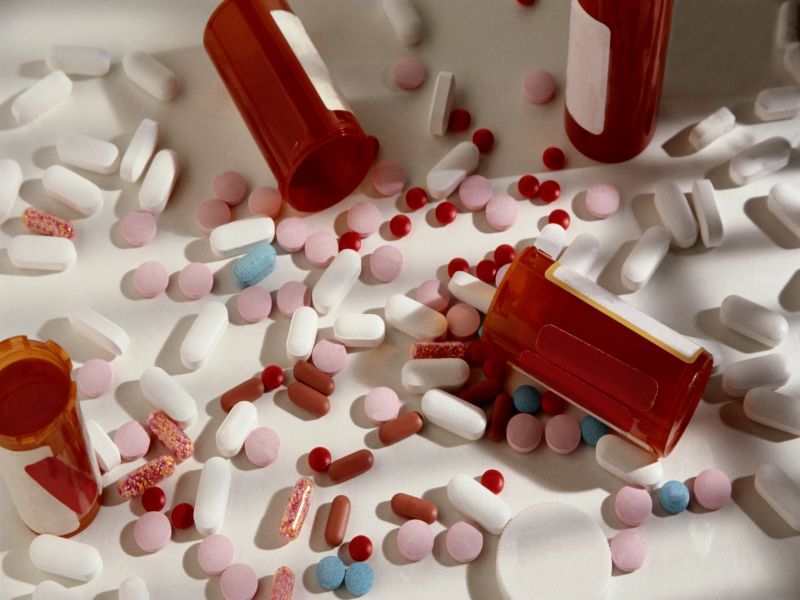
THURSDAY, April 28, 2016 (HealthDay News) -- Have you ever wondered how to get rid of an unfinished bottle of prescription drugs?
Don't throw it in the trash or flush it down the toilet, advises the U.S. Drug Enforcement Administration (DEA). Those methods of dumping your pills can actually be a safety hazard, the DEA says.
Instead, Americans with expired, unused and unwanted prescription drugs can bring them for disposal at drop-off centers nationwide during Drug Take-Back Day, which takes place this year on Saturday, April 30, according to the DEA.
Drop-off sites will be open from 10 a.m. to 2 p.m. You can find one near you by going to the DEA'sDiversion Control website. The service is free and anonymous.
Only pills and patches will be accepted. The DEA will not take liquids, needles or sharps.
The 10 previous take-back events have collected more than 5.5 million pounds (more than 2,750 tons) of pills, according to the DEA.
"This initiative addresses a vital public safety and public health issue. Medicines that languish in home cabinets are highly susceptible to diversion, misuse and abuse," the DEA said in a news release.
The DEA said rates of prescription drug abuse, overdoses and accidental poisonings due to prescription drugs in the United States are alarmingly high. And, a majority of abused prescription drugs are obtained from family and friends, including from the home medicine cabinet, previous studies have shown.
SOURCE: U.S. Drug Enforcement Administration, news release
HealthDay
News stories are provided by HealthDay and do not reflect the views of MedlinePlus, the National Library of Medicine, the National Institutes of Health, the U.S. Department of Health and Human Services, or federal policy.
More Health News on:
Medicines