|
| | March 1, 2019 | |
| | |
| | The latest fluorescence news from AZoNetwork | |
|
|
| | Advances in Dye Development and Microscopy for Live-Cell Super Resolution Microscopy
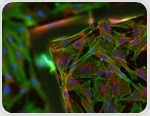
This webinar discusses Vutara 352 technology and sample preparation techniques for successful live-cell imaging using the currently available family of fluorophores. Additionally, a recent research collaboration involving the development of dyes that spontaneously blink under physiological conditions and low laser power, will be described. The characteristics of these dyes make them ideal for long term live-cell imaging without phototoxicity.
| |
|
|
|
|
 |
| | It is important to prevent cell death during fluorescence microscopy, as dying cells may skew experimental results and introduce artifacts. | |
|
| | A new method uses fluorescence to detect potentially disease-causing forms of proteins as they unravel due to stress or mutations. | |
|
| | This article discusses how to choose the best fusion flux for XRF sample preparation. | |
|
| | Energy Dispersive X-Ray Fluorescence (EDXRF) is a key instrument to determine the authenticity of precious gemstones and their geographical origin. | |
|
| | NUS chemists have developed a novel ratiometric fluorescent probe for studying cellular activity of the clinically important anticancer drug cisplatin for next generation drug development. | |
|
|
|
|
No hay comentarios:
Publicar un comentario