sábado, 31 de marzo de 2018

Viral Suppression Among Youth and People Who Inject Drugs Is Improving, But Results Are Still Below the National Average | HIV.gov

Viral Suppression Among Youth and People Who Inject Drugs Is Improving, But Results Are Still Below the National Average | HIV.gov

HIV.gov


this week on HIV.gov

FEDERAL RESPONSE BLOG POSTS
ICYMI: HIV Research Round-Up from CROI 2018
Earlier this month, we partnered with Federal colleagues from NIH, CDC, and HRSA to share highlights of and perspectives on HIV research coming out of the 2018 Conference on Retroviruses and Opportunistic Infections (CROI). This included six Facebook Live videos that have reached more than 20,000 viewers...
LEARN MORE >>
DIGITAL TOOLS BLOG POSTS
Making Customer Satisfaction Data Actionable at the Peace Corps
For the past couple of years, the Peace Corps has used online-based intercept surveys on peacecorps.gov to measure user satisfaction. The data captured over time has been interesting, but has not varied much month-to-month, which has made it difficult to translate insight into actionable enhancements on the website...
LEARN MORE >>
HIV/AIDS BASICS BLOG POSTS
Make sure you read: Viral Suppression Among Youth and People Who Inject Drugs Is Improving, But Results Are Still Below the National Average
Recently we took a close look at the improvement that has been made in the overall percentage of people diagnosed with HIV who have achieved viral suppression in the United States. The most recent data for 2014 showed that 57.9% of all people diagnosed with HIV are virally suppressed...
LEARN MORE >>


ribbonAWARENESS DAYS
National Transgender HIV Testing Day, April 18, recognizes the importance of routine HIV testing, status awareness and continued focus on HIV prevention and treatment efforts among transgender and gender non-binary people. 

calendarUPCOMING EVENTS
A December 2018 What Works in Youth HIV needs assessment revealed recruiting and engaging youth as the #1 challenge to starting or continuing youth HIV prevention programs. Register for an April 4 (scroll to see the event) webinar to learn recruitment and engagement strategies.

On Demand: Label-free tissue classification by wide-field, QCL based IR-Imaging

alt_text
AZoNetwork

WEBINAR RECORDING:

Label-free tissue classification by wide-field, QCL based IR-Imaging

Join Daylight Solutions as they present a webinar by Prof. Dr. Klaus Gerwert, Head of the Department of Biophysics and Founding Director of the Protein Diagnostics Institute at Ruhr University Bochum (Germany).

The webinar will showcase the power of combining high-speed, mid-IR imaging with advanced machine learning to perform automated characterization of cancer tissues on clinically relevant timescales. Learn how this groundbreaking approach is revolutionizing the classical histopathology and omics workflows. 


WATCH NOW
Meet the Speaker


Prof. Dr. Klaus Gerwert
Ruhr University Bochum

Klaus Gerwert studied physics in Muenster and graduated in biophysical chemistry in Freiburg. After positions at the Max Planck Institute, Dortmund, and the Scripps Research Institute in La Jolla, USA, he became university professor and chair of the biophysics department at Ruhr-University-Bochum in 1993. He was Director at the Max-Planck-Partner Institute in Shanghai, China, from 2008 to 2013 and was Fellow of the Max-Planck Society till 2017. Gerwert actively promotes the development and application of vibrational spectroscopy in protein-research and diagnostics in over 200 publications. He also holds several patents and has been awarded several prizes.
AZoNetwork UK Ltd.
NEO, 9 Charlotte St, Manchester, M1 4ET, UK
+44 (0)161 457 7150

FDA Authorizes First Fully Interoperable Continuous Glucose Monitoring System

U.S. Food and Drug Administration Header


On March 27, 2018, FDA permitted marketing of the Dexcom G6 integrated continuous glucose monitoring (iCGM) system for determining blood glucose levels in:
  • children aged two and older
  • adults with diabetes.
This is the first type of continuous glucose monitoring system permitted by the agency to be used as part of an integrated system with other compatible medical devices and electronic interfaces, which may include automated insulin dosing systems, insulin pumps, blood glucose meters or other electronic devices used for diabetes management.
 
The Dexcom G6 is a patch device, about the size of a quarter, that is applied to the skin of the abdomen and contains a small sensor that continuously measures the amount of glucose in body fluid. The device transmits real-time glucose readings every five minutes to a compatible display device such as a mobile medical app on a cell phone and will trigger an alarm when a patient’s blood sugar enters a danger zone soaring too high or dropping too low. If it’s integrated with an automated insulin dosing system, a rise in blood sugar would trigger the release of insulin from the pump. The patch device should be replaced every 10 days.

For more information on the Dexcom G6 integrated continuous glucose monitoring system please see the FDA Press Announcement.
The updated label will soon be available at drugs@fda or DailyMed

Steve Morin
Office of Health and Constituent Affairs
Food and Drug Administration

Visit the FDA Patient Network for more Information about the
 FDA Diabetes Liaison Program

The simple cure for the biggest health problem in America

Harvard Health Publishing


Walk your way to better health in
less than 30 minutes a day!

Walking for Health
This Special Health Report includes:
5 walking workouts
Warm-up exercises
Post-walk stretches
Strength-training moves for walkers
Tips for staying motivated
Special Section: "Walking for weight loss"
And more!

Read More
Dear CERASALE,
Walking may be one of the most powerful “medicines” available.
It can help lower your risk of heart disease, cancer, and diabetes, lower blood pressure and cholesterol levels, and even keep your memory sharp.
The simple activity of walking has so many powerful health benefits, the experts at Harvard Medical School created Walking for Health. This special report takes you step-by-step from why walking may be the most perfect exercise, to how to get started on a walking program, to specific walking workouts.
Send for this report now and discover:
  • Why a short post-meal walk is a great way to lower blood glucose levels
  • How to walk downhill without hurting your knees
  • The walking mistake that can strain your upper back and neck
  • 5 simple ways to turn your walk into a heart-pumping workout
  • Why all-cotton socks may give you blisters (choose the type on page 18 instead)
  • The 2-in-1 walking workout that strengthens your upper body while you walk
  • And so much more!
Plus, you’ll get 5 great walking workouts and a special section on walking for weight loss that show you:
6 exercises that help you strengthen key walking muscles, post-walk stretches that help increase your flexibility and range of motion, how to burn 25% more calories when you walk, and so much more.
Read More
Sincerely,
Gregory D. Curfman, M.D.
Editor in Chief, Harvard Health Publishing
PS: Click here now to get your own copy of Walking for Health and save 30% off the cover price.

Naomi Swanson, PhD: Advancing Worker Health Through Improved Organization of Work and Ergonomic Design | | Blogs | CDC

Naomi Swanson, PhD: Advancing Worker Health Through Improved Organization of Work and Ergonomic Design | | Blogs | CDC

Centers for Disease Control and Prevention. CDC twenty four seven. Saving Lives, Protecting People

Naomi Swanson, PhD: Advancing Worker Health Through Improved Organization of Work and Ergonomic Design

Posted on  by Julie Tisdale-Pardi, MADuring Women’s History Month, NIOSH will highlight several female researchers and their contributions to NIOSH and America’s workers.


Naomi Swanson has served as the Chief of the Organizational Science and Human Factors Branch (OSHFB) in the NIOSH Division of Applied Research and Technology since May 2008. She received her M.A. in Experimental Psychology (specializing in perception, cognition and memory) and her Ph.D. in Industrial Engineering (specializing in sociotechnical systems and office ergonomics) from the University of Wisconsin-Madison. She began her career at NIOSH in 1987 as a Research Psychologist in the Motivation and Stress Research Section within the Division of Biomedical and Behavioral Sciences. During her 30-year tenure, Dr. Swanson has designed, conducted and overseen laboratory and field research in the areas of office ergonomics, work organization, and occupational stress. She also assisted in establishing the area of Occupational Health Psychology in the U.S., serving on the American Psychological Association’s Occupational Health Psychology Advisory Board from 1992-2004, and serving on the Editorial Review Board of the Journal of Occupational Health Psychology from its beginning in 1994 through 2001. She has played an active role in the inception and planning of the Work, Stress, and Health international conference series, which began in 1990, and is co-sponsored with the American Psychological Association and the Society for Occupational Psychology. She currently serves as the NIOSH Co-Chair of the conference series.
As OSHFB Branch Chief, she oversees studies on upper extremity and low back musculoskeletal disorders and on aspects of work and organizational design that are linked to job stressors and the health problems associated with those exposures. Dr. Swanson is honored to work with the branch’s national and international experts in the areas of ergonomics and work organization and stress and is extremely proud of their creative, influential, and award-winning work.
Currently, Dr. Swanson serves as a co-manager of the National Occupational Research Agenda Healthy Work Design and Well-Being cross-sector program. This new program combines elements of work organization, economics, and Total Worker Health® “…to protect and advance worker safety, health, and well-being by improving the design of work, management practices, and the physical and psychosocial work environment.” Dr. Swanson is excited about the opportunity to work with her co-managers on this new program of research for the Institute.

Julie Tisdale-Pardi, MA, is the coordinator of the NIOSH Science Blog
Posted on  by Julie Tisdale-Pardi, MA

Annual Report on Prostate Diseases - Harvard Health

Annual Report on Prostate Diseases - Harvard Health

Harvard logo

Yoga lessens treatment-related symptoms in men with prostate cancer

yoga prostate cancer


Decades of research show that yoga can reduce the emotional and physical fatigue brought on by cancer treatment. In 2017, scientists reported for the first time that this is also true specifically for men undergoing treatment for prostate cancer. Men who took a yoga class twice a week during prostate cancer radiation treatment reported less fatigue, fewer sexual side effects, and better urinary functioning than men who did not.
The research team enrolled 50 men ages 53 to 85 who were diagnosed with early or advanced nonmetastatic prostate cancer. Of them, 22 were assigned to yoga classes and the rest did not participate in yoga. All the men received scheduled radiation treatments; 29 of them were also on hormonal therapy, and 19 had been treated previously with surgery. The yoga and control groups were evenly balanced with respect to various cancer treatments as well as treatments for side effects.
Get your copy of 2018 Annual Report on Prostate Disease

Product Page - 2018 Annual Report on Prostate Disease
Most men eventually develop some type of prostate problem, and when they do there are usually no easy solutions. More than a primer on prostate conditions, this Special Health Report, the Annual Report on Prostate Diseases, includes roundtable discussions with experts at the forefront of prostate research, interviews with men about their treatment decisions, and the latest thinking on complementary therapies. This report will provide you with the information you need to understand the current controversies, avoid common pitfalls, and work with your doctor to make informed choices about your prostate health.

Read More
The type of yoga assessed in the study, called Eischens yoga, focuses on holding and maintaining poses, and is accessible for all body types and experience levels. The sessions lasted 75 minutes each. Before, during, and after the nine-week study, men were asked to rate their fatigue, as well as sexual and urinary symptoms.
Men in the yoga group reported improving or stabilizing symptom scores over time, whereas men in the non-yoga group reported worsening symptoms. The authors speculated that yoga improves erectile and urinary function by strengthening core muscles and improving blood flow. They urged men to keep an open mind and to look for a yoga group and instructor with whom they feel comfortable.
To learn more about the latest studies and treatment options for men dealing with prostate issues, read the 2018 Annual Report on Prostate Disease from Harvard Medical School
Product Page - 2018 Annual Report on Prostate Disease

Read More


2018 Annual Report on Prostate Disease

Featured content:


A year of progress in prostate research
An introduction to the prostate gland
Inflammation of the prostate (prostatitis)
Prostate enlargement (benign prostatic hyperplasia)
Prostate cancer
• ... and more!

Click here to read more »

What's your t-score? Bone density scans for osteoporosis - Harvard Health

What's your t-score? Bone density scans for osteoporosis - Harvard Health

Harvard Medical School

What's your t-score? Bone density scans for osteoporosis

bone density scan

What's your t-score? Bone density scans for osteoporosis

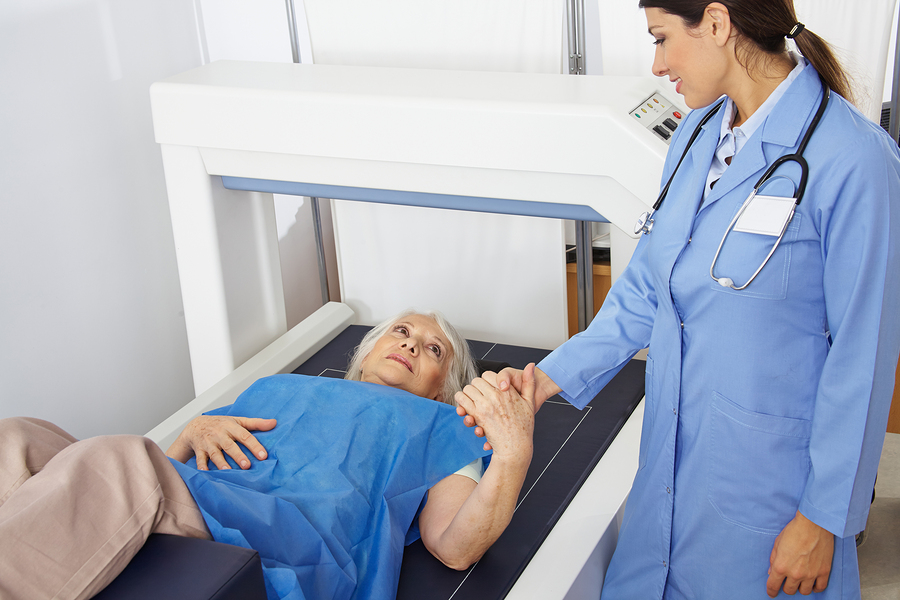
Several technologies can assess bone density, but the most common is known as dual energy x-ray absorptiometry (DEXA). For this procedure, a machine sends x-rays through bones in order to calculate bone density. The process is quick, taking only five minutes.