sábado, 31 de octubre de 2015

Too Much TV Linked to Leading Causes of Death: MedlinePlus

Too Much TV Linked to Leading Causes of Death: MedlinePlus

MedlinePlus Trusted Health Information for You

Too Much TV Linked to Leading Causes of Death

Study found the more time spent in front of the tube, the greater the risk
     
By Robert Preidt
Thursday, October 29, 2015
HealthDay news image
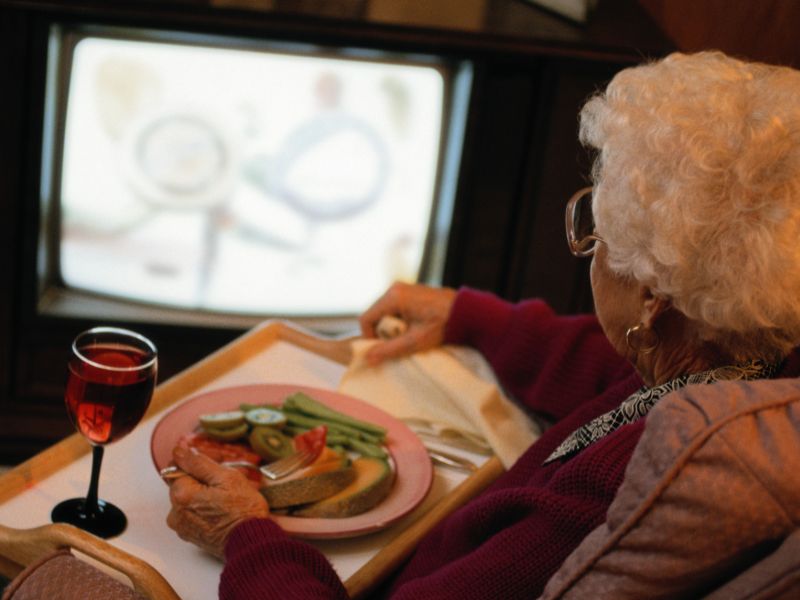
THURSDAY, Oct. 29, 2015 (HealthDay News) -- A new study links watching too much TV with some of the leading causes of death in the United States.
Ninety-two percent of Americans have a TV in their home, according to background information in the study. And 80 percent of American adults watch an average of three-and-a-half hours of TV a day, which is more than half of their leisure time.
"We know that television viewing is the most prevalent leisure-time sedentary behavior and our working hypothesis is that it is an indicator of overall physical inactivity," explained study author Sarah Keadle, a cancer prevention fellow at the U.S. National Cancer Institute.
"In this context, our results fit within a growing body of research indicating that too much sitting can have many different adverse health effects," Keadle said.
In the study, the researchers followed more than 221,000 people, aged 50 to 71, who did not have any chronic diseases at the start of the nearly 15-year study. All were followed until death or until December 2011.
The more TV the older adults watched, the more likely they were to die from conditions such as heart disease, cancer, diabetes, flu/pneumonia, Parkinson's disease and liver disease, the investigators found.
Compared with those who watched less than one hour of TV per day, the risk of death during the study period was 15 percent higher among those who watched three to four hours of TV a day, and 47 percent higher for those who watched seven or more hours a day, the findings showed.
Even after the researchers took into account for other risk factors -- such as smoking, drinking alcohol, calorie intake and health problems -- the association between TV viewing and increased risk of death during the study period remained.
However, the association seen in the study does not mean that watching too much TV causes death from these diseases.
The increased risk of death associated with watching a lot of TV was seen in both active and inactive people in the study, according to the report published online Oct. 27 in the American Journal of Preventive Medicine.
"Although we found that exercise did not fully eliminate risks associated with prolonged television viewing, certainly for those who want to reduce their sedentary television viewing, exercise should be the first choice to replace that previously inactive time," Keadle said in a journal news release.
The findings add to growing evidence that spending too much time sitting is a threat to health.
"Older adults watch the most TV of any demographic group in the U.S.," Keadle said. "Given the increasing age of the population, the high prevalence of TV viewing in leisure time, and the broad range of mortality outcomes for which risk appears to be increased, prolonged TV viewing may be a more important target for public health intervention than previously recognized."
SOURCE: American Journal of Preventive Medicine, news release, Oct. 27, 2015
HealthDay
More Health News on:
Exercise for Seniors
Seniors' Health

Too Many Seniors With Diabetes Are Overtreated, Study Suggests: MedlinePlus

Too Many Seniors With Diabetes Are Overtreated, Study Suggests: MedlinePlus

MedlinePlus Trusted Health Information for You


Too Many Seniors With Diabetes Are Overtreated, Study Suggests

Even when blood sugar, blood pressure levels dropped too low, doctors didn't cut back on meds
     
Thursday, October 29, 2015
HealthDay news image
THURSDAY, Oct. 29, 2015 (HealthDay News) -- When it comes to treating seniors with diabetes, new research suggests that doctors often don't cut back on medications, even when treatment goals are surpassed.
The study found that when people had potentially dangerous low blood sugar levels, just 27 percent had their medicines decreased. And when blood pressure treatments lowered blood pressure levels too much, just 19 percent saw a reduction in their medications.
"As people get older, the risks of overtreating become greater, and the benefits become shorter. We have to start emphasizing that more isn't always better," said study author Dr. Jeremy Sussman, an assistant professor of internal medicine at the University of Michigan in Ann Arbor and a primary care doctor at the Ann Arbor VA System.
The findings were published online Oct. 26 in the journal JAMA Internal Medicine.
Practice guidelines generally focus on intensifying treatments for people with diabetes, to ensure that their blood sugar and blood pressure are at levels that have been shown to reduce complications, such as heart disease. But, with greater pressure to meet these treatment goals, overtreatment has now become an issue, the study authors said.
To get a better idea of the scope of the problem, the researchers reviewed U.S. Veterans Health Affairs records for more than 211,000 people with diabetes between 2012 and 2015. All were aged 70 or older. The study participants were receiving treatment to lower blood pressure or blood sugar levels.
The study excluded people taking medications known as angiotensin-converting enzyme (ACE) inhibitors or angiotensin receptor blockers (ARBs) for blood pressure, because these medications have additional benefits beyond lowering blood pressure.
The researchers also excluded people who were just taking metformin for their diabetes, because this medication doesn't have a high risk of causing dangerously low blood sugar levels. It also may have additional benefits beyond lowering blood sugar, the study authors added.
Sussman said that the risks of overtreating high blood pressure could be a substantial increase in falls, confusion and drug interactions. A systolic -- the top number -- blood pressure of under 120 is too low for people over 70, he noted.
Low blood sugar levels can also lead to confusion, falls and hospitalizations, according to Sussman. A very low blood sugar level is an A1C test of less than 6 percent, the study said. A1C is a rough estimate of blood sugar levels over several months.
"Overtreatment is work, and people are being asked to work hard for something that's counterproductive," Sussman said. In addition, failing to reduce treatment when it's called for is "wasting money for an outcome that will make patients less healthy," he explained.
So why aren't doctors stepping treatments down? A second study in the same issue of the journal attempted to answer that question.
Researchers from the Ann Arbor Veterans Affairs Center for Clinical Management Research in Michigan surveyed a national sample of nearly 600 physicians working in the U.S. Department of Veterans Affairs.
One-third of doctors surveyed said they thought their patients could benefit from exceeding treatment guideline goals. Nearly one-quarter were concerned about a potential malpractice suit from reducing treatment. Nearly half were concerned that lowering medications for those who've exceeded the goals would lower their scores on performance measures, the study found.
Another 20 percent were worried that patients would be upset if they reduced their medications, the survey reported.
"We spend so much time telling people that it's important to take their medications, it's tough to now say you're being overtreated. But people's needs change with age," Sussman explained.
Another diabetes expert agreed.
"In elderly patients, we worry about being too aggressive. We don't necessarily have to bring the A1C to under 7 percent. As patients get older and sicker, even the same medications they've been on can cause more low blood pressure and low blood sugar," said Dr. Joel Zonszein, director of the Clinical Diabetes Center at Montefiore Medical Center in New York City.
But, he said he doesn't think there needs to be a big push to lower medications across the board. Zonszein said that the need to intensify treatment regimens is generally a bigger problem, and he worries this study might unnecessarily worry patients.
Zonszein added, "Doctors need to use more clinical judgment and provide more patient-centered therapy."
Sussman said it's important to remember that "just because a medication was right for you at one point doesn't mean it always will be. At least once a year, talk to your doctor and make sure all of your medications still make sense."
SOURCES: Jeremy Sussman, M.D., assistant professor, internal medicine, University of Michigan, Ann Arbor, and primary care doctor, Ann Arbor VA System; Joel Zonszein, M.D., director, Clinical Diabetes Center, Montefiore Medical Center, New York City; Oct. 26, 2015, JAMA Internal Medicine, online
HealthDay
More Health News on:
Diabetes Type 2
High Blood Pressure
Seniors' Health

Media Often Overplays Cancer Drug Research, Study Finds: MedlinePlus

Media Often Overplays Cancer Drug Research, Study Finds: MedlinePlus

MedlinePlus Trusted Health Information for You

Media Often Overplays Cancer Drug Research, Study Finds

Hype irresponsibly raises hopes of desperate patients, experts say
     
Thursday, October 29, 2015
HealthDay news image
THURSDAY, Oct. 29, 2015 (HealthDay News) -- News articles that promise "breakthrough, "game-changing" new cancer drugs could irresponsibly raise the hopes of desperate patients, a new report suggests.
Just five days' worth of news last June contained 94 articles that lavishly praised 36 different cancer drugs, researchers found by combing Google.
Unfortunately, half of the "marvel" drugs had not been approved by the U.S. Food and Drug Administration, and 14 percent had never been tested on humans, the results showed.
"The net effect is really confusion," said study co-author Dr. Vinay Prasad, an oncologist at Oregon Health and Science University.
"We found that the use of superlatives or grandiose descriptors of drugs happens whether drugs are approved or not, whether they are tested in people or not, or whether they improve survival or not," Prasad said. "I think the average person who follows cancer news is rightfully frustrated, and may be unsure which drugs are really promising."
The study results were published online Oct. 29 in JAMA Oncology.
Cancer patients are most harmed by this hype, said Dr. Lidia Schapira, editor-in-chief of Cancer.net and an oncologist at Massachusetts General Hospital in Boston.
Recently, the extreme optimism displayed in some cancer coverage led to a tough conversation between Schapira and a distraught patient suffering from advanced cancer.
"She was telling me she was surrounded by all of the media reporting all these incredible miracles and successes, and she felt she wasn't benefitting directly from this," Schapira said. "It took a long conversation for her to appreciate that what she was referring to was a lot of hype."
For the study, Prasad and his colleagues scanned Google news for 10 specific superlatives used in conjunction with the term "cancer drug." The search included the words breakthrough, game changer, miracle, cure, home run, revolutionary, transformative, life saver, groundbreaking and marvel.
The investigators found that 18 of the 36 drugs described had not been approved by the FDA for any particular use in people. Five of the 36 hadn't even been tested on humans; the stories were based on laboratory research involving mice or cell cultures.
"Targeted therapy" drugs designed to precisely identify and attack cancer cells received the most hype, with 47 percent of the articles focusing on this new type of medication, the findings showed.
More than half the time, the journalists writing the article included the superlative on their own, without attributing it to a source. Physicians provided the hype 27 percent of the time, industry experts 9 percent, and patients 8 percent of the time.
"The doctors who develop drugs, the industry who promotes them, and the journalists who cover them all share in this," Prasad said.
Dr. Len Lichtenfeld, deputy chief medical officer for the American Cancer Society, said this isn't a new trend. For many years, he said, he's "been concerned about what I call the hope and the hype, where there have been reports in the media quoting experts that overpromise on treatments."
Lichtenfeld said that legitimately important medical advances have taken place in recent years, including the new targeted therapies as well as immunotherapy drugs that goad the body's immune system into killing cancer cells.
But science is a slow and incremental process, and reporters and researchers are sometimes too quick to describe a single small step as a major leap, said Dr. Louis Potters, chair of radiation for North Shore-LIJ Health System in Great Neck, N.Y.
"I've been in practice for 23 years, and you see these tidal waves of discoveries, whether they're pharmaceutical or devices or surgical, and the hype usually gets ahead of the reality," said Potters.
Unfortunately, "patients buy into the hype 200 percent," Potters said. "Cancer is one of the most polluting words in the dictionary, because it creates a tremendous amount of fear and anxiety."
Journalists should continue to cover advances in science, the experts say, but must avoid using overblown rhetoric and provide important context about each study's design and potential flaws.
"I believe in sharing results and research with the public. If there are new findings, it's important to relay that to the public, but do it responsibly," Schapira said.
For example, reporters and scientists should avoid calling a cancer drug "groundbreaking" if it's only been tested in a laboratory, Lichtenfeld said.
"Very few things reported in journals make an overnight impact in the care of our patients," he said.
SOURCES: Vinay Prasad, M.D., M.P.H., oncologist, Oregon Health and Science University, Portland; Lidia Schapira, M.D., editor-in-chief, Cancer.net, and oncologist, Massachusetts General Hospital, Boston; Len Lichtenfeld, M.D., deputy chief medical officer, American Cancer Society; Louis Potters, M.D., chair, radiation medicine, North Shore-LIJ Health System, Great Neck, N.Y.; Oct. 29, 2015,JAMA Oncology, online
HealthDay
More Health News on:
Cancer
Medicines

Statins May Dampen Protective Powers of Flu Vaccines: MedlinePlus

Statins May Dampen Protective Powers of Flu Vaccines: MedlinePlus

MedlinePlus Trusted Health Information for You


Statins May Dampen Protective Powers of Flu Vaccines

Research suggests cholesterol-lowering meds linked to lower levels of influenza antibodies in seniors
     
Thursday, October 29, 2015
HealthDay news image
THURSDAY, Oct. 29, 2015 (HealthDay News) -- Two new studies raise the possibility that the popular cholesterol-lowering drugs known as statins may blunt the effectiveness of flu vaccines in seniors.
But experts caution that more research is needed to better understand the issue, and that older people shouldn't throw away their statins just yet.
"There is a clear-cut benefit to persons taking statins, so patients should not stop statin use because of the study results, even for a short time," said Dr. Robert Atmar, a clinical research professor of infectious diseases at Baylor College of Medicine in Houston. He co-wrote a commentary that accompanied the studies.
And flu vaccines provide at least some protection in people who take statins, so "patients should still receive an influenza vaccine to be protected," Atmar added.
Still, the findings raise yet another question about the safety of statins. While they can lower the risk of heart problems due to clogged arteries, some research has shown that the drugs can also cause side effects, such as muscle pain, liver damage and memory loss.
In the first study, funded by Novartis Vaccines, Dr. Steven Black of the Center for Global Health, Cincinnati Children's Hospital, and colleagues looked at the medical records of nearly 7,000 people over the age of 65 in the United States and three other countries. They had all taken part in a 2009-2011 clinical trial of a flu vaccine.
The researchers looked at the results of tests taken three weeks after the study participants were vaccinated. The levels of antibodies to flu -- a measurement of the vaccine's effectiveness at priming the body to fight off the virus -- were 38 percent to 67 percent lower in those who took statins, depending on the type of flu strain. Natural statins seemed to have less of a vaccine-dampening effect than those created artificially. Red yeast rice is a natural statin, while Lipitor and Crestor are examples of synthetic statins.
The researchers suggested that older people on statins may need higher doses of flu vaccines or vaccine boosters to better arm their immune system. A high-dose flu vaccine is approved and available for adults aged 65 and older in the United States, along with several standard-dose vaccines, they added.
The second study, which examined the effects of the flu vaccine on a kind of respiratory illness, was launched because of reports that statins decrease inflammation in the body, explained study author Dr. Saad Omer, an associate professor at the Emory Vaccine Center in Atlanta.
Inflammation, part of the body's immune response to invaders, can be harmful. According to Omer, statins may improve cardiac health in part by lowering inflammation levels in blood vessels.
On the other hand, the flu vaccine primes the body to fight the influenza virus through inflammation. Essentially, Omer explained, "a little bit of inflammation after vaccination is good."
To gain more insight into how statins and the flu vaccine might interact, Omer and colleagues looked at cases of so-called acute respiratory illness, which can be caused by influenza, among almost 140,000 Kaiser Permanente health plan patients in Georgia. The researchers tracked the patients over flu seasons from 2002 to 2011.
The investigators wanted to understand if patients who got flu vaccines developed less protection against influenza if they also took statins. Statistical formulas designed to measure vaccine effectiveness reveal that they did, even after researchers adjusted their statistics so they wouldn't be thrown off by various factors.
The findings suggest that "if you are on statins, the flu vaccine is slightly less effective," Omer said.
But that may not be the whole picture, he said. It's possible that the inflammation-fighting powers of statins could help the body fight off flu once it's infected.
What now? More studies are needed, said Atmar, who acknowledged getting funding from a vaccine company in the past. However, he said, the findings of the two new studies "are plausible, based upon what we know about the effects of statins."
The research is published in the Oct. 29 issue of The Journal of Infectious Diseases.
SOURCES: Saad Omer, Ph.D., M.P.H., associate professor, Emory Vaccine Center, and associate professor, Global Health and Epidemiology, Rollins School of Public Health, Emory University, Atlanta; Robert Atmar, M.D., clinical research professor, infectious diseases, and interim chief, section of infectious diseases, departments of medicine and molecular virology & microbiology, Baylor College of Medicine, Houston; Oct. 29, 2015, The Journal of Infectious Diseases
HealthDay
More Health News on:
Flu Shot
Seniors' Health
Statins

Breast Cancer Equally Common Now Among Blacks, Whites: MedlinePlus

Breast Cancer Equally Common Now Among Blacks, Whites: MedlinePlus

MedlinePlus Trusted Health Information for You

Breast Cancer Equally Common Now Among Blacks, Whites

In years past, rate for whites exceeded that of blacks, but that gap is gone, American Cancer Society says
     
By Robert Preidt
Thursday, October 29, 2015
HealthDay news image
THURSDAY, Oct. 29, 2015 (HealthDay News) -- Breast cancer is now as common among black women as among whites, although black women continue to have a higher death rate from the disease, an American Cancer Society report says.
For decades, black women had lower breast cancer rates than whites, but that gap has narrowed in recent years, the cancer society said.
From 2008 to 2012, breast cancer rates rose by 0.4 percent a year among black women, while remaining stable among whites and Hispanics.
That means that by 2012, overall breast cancer rates among blacks and whites converged. In fact, the researchers said, rates for black women now exceed those of whites in seven states: Alabama, Kentucky, Louisiana, Mississippi, Missouri, Oklahoma and Tennessee.
In addition, black women still tend to fare worse than whites after a breast cancer diagnosis, and breast cancer death rates continue to be higher among blacks than whites, according to the American Cancer Society (ACS). By 2012, death rates among black women were 42 percent higher than in white women, and this trend is likely to continue at least in the near future, the researchers said.
One expert wasn't surprised by the findings.
"The racial disparities between survival amongst patients with breast cancer have been known for some time," said Dr. Stephanie Bernik, chief of surgical oncology at Lenox Hill Hospital in New York City. "It is upsetting to see that the disparities persist, despite efforts to ensure that minority women have access to screening and treatment."
Medicine is making inroads against breast cancer, but some groups are benefiting more than others. According to the new report, from 2003 to 2012, breast cancer death rates fell 1.8 percent a year among whites, 1.5 percent among Hispanics, and 1.4 percent among blacks.
Along with having the highest breast cancer death rate, black women are also more likely to be diagnosed at later stages of the disease and have the lowest survival rate at each stage of diagnosis. According to the ACS, potential reasons for these trends include lack of regular screening and/or follow-up of suspicious results; poor access to timely, high-quality treatment; and higher rates of aggressive, harder-to-treat tumors.
Dr. Paolo Boffetta is chief of cancer prevention and control at the Icahn School of Medicine at Mount Sinai in New York City. He said the new report "shows more clearly than ever before how disparities between white and African-American women have worsened during in the last years, a trend which will likely continue."
Boffetta believes the disparities exist because black women may have higher exposure to certain breast cancer risk factors compared to white women, and they often have poorer access to mammography and other types of screening, as well as effective therapies.
"Possible solutions require complex interventions targeted at reducing risk factors, improving screening, and providing access to effective treatment," Boffetta suggested.
According to the ACS, as of Jan. 1, 2014, more than 3.1 million American women with a history of breast cancer were alive. Most of them were cancer-free, but some still had cancer and may have been receiving treatment, the report said.
There has been a 36 percent decline in U.S. breast cancer death rates since 1989, which means that 249,000 breast cancer deaths have been prevented, the ACS said.
In 2013, 69 percent of women aged 45 and older said they'd had a mammogram within the past two years. Screening rates are lower among those who are uninsured or have lower levels of schooling, and for Hispanics and American Indian/Alaska Natives.
After skin cancer, breast cancer remains is the most common type of cancer among American women, accounting for nearly one in three cancers. It is the second-leading cause of cancer death among American women, after lung cancer.
In 2015, it is estimated that about 232,000 new cases of invasive breast cancer will be diagnosed in the United States and there will be nearly 40,300 deaths.
The new study findings are published in the Oct. 29 issue of CA: A Cancer Journal for Clinicians, and the accompanying consumer publication Breast Cancer Facts & Figures.
SOURCES: Stephanie Bernik, M.D., chief, surgical oncology, Lenox Hill Hospital, New York City; Paolo Boffetta, M.D., professor, medicine, hematology and medical oncology, oncological sciences, preventive medicine, associate director, population sciences, Tisch Cancer Institute, chief, division of cancer prevention and control, Icahn School of Medicine at Mount Sinai, New York City; American Cancer Society, news release, Oct. 29, 2015
HealthDay
More Health News on:
African American Health
Breast Cancer
Health Disparities