lunes, 31 de agosto de 2015

Centers for Disease Control and Prevention (CDC) Health Matters for Women[TM] E-Newsletter Update

Centers for Disease Control and Prevention (CDC) Health Matters for Women[TM] E-Newsletter Update

Health Matters for Women newsletter from the CDC - US Department of Health and Human Services - Centers for Disease Control and Prevention


New from CDC

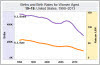
U.S. and State Trends on Teen Births, 1990–2013 (Data Visualization Gallery)
This dashboard assembles all final birth data for women aged 15–19, 15–17, and 18–19 to produce interactive maps and trend lines for the United States and each of the 50 states.
Policies and Practices for Cancer Prevention: Reducing Excessive Alcohol Use
Alcohol use increases the risk of several cancers, including female breast cancer. This publication provides information about alcohol use among young people and adults and potential strategies for reducing excessive alcohol use in your community.
United States Cancer Statistics 2012 Data Released
This Web-based report includes the official federal statistics on cancer incidence from registries that have high-quality data and cancer mortality statistics for each year and 2008–2012 combined. It is produced by CDC and the National Cancer Institute.
Breast Cancer Awareness
Learn the facts, symptoms, and how to lower your risk for breast cancer. If you are 50 to 74 years old, be sure to have a screening mammogram every two years. If you are 40 to 49 years old, talk to your doctor about when to start and how often to get a screening mammogram. CDC offers free or low-cost mammograms.
Percentage of Adults Aged 65 and Over With Osteoporosis or Low Bone Mass at the Femur Neck or Lumbar Spine: United States, 2005–2010
During 2005–2010, 16.2% of adults aged 65 and over had osteoporosis at the lumbar spine or femur neck. The age-adjusted prevalence of osteoporosis at either skeletal site was higher among women (24.8%) than men (5.6%).
Updated DATING MATTERS®: Understanding Teen Dating Violence Prevention
Dating Matters® is a free, online course available to educators, school personnel, youth mentors, and others dedicated to improving teen health. Follow a school administrator throughout his day as he highlights what teen dating violence is and how to prevent it through graphic novel scenarios, interactive exercises, and information gathered from leading experts.
Infant Mortality Statistics From the 2013 Period Linked Birth/Infant Death Data Set
The U.S. infant mortality rate was 5.96 infant deaths per 1,000 live births in 2013, similar to the rate of 5.98 in 2012. This report presents 2013 period infant mortality statistics from the linked birth/infant death data set (linked file) by maternal and infant characteristics.
Prevention and Control of Influenza with Vaccines: Recommendations of the Advisory Committee on Immunization Practices, United States, 2015–16 Influenza Season
Updated information for the 2015–16 season includes 1) antigenic composition of U.S. seasonal influenza vaccines; 2) information on influenza vaccine products expected to be available; 3) an updated algorithm for determining the appropriate number of doses for children aged 6 months through 8 years; and 4) recommendations for the use of live attenuated influenza vaccine (LAIV) and inactivated influenza vaccine (IIV).
Make STEADI Part of Your Medical Practice
Falls are not an inevitable part of aging. There are specific things that you, as their health care provider, can do to reduce their chances of falling.

Snapshots

august 1
august 2
august 3

Federal Agency News


National, State and Local News


Global

Health Tip: Balance Homework With Down Time: MedlinePlus

Health Tip: Balance Homework With Down Time: MedlinePlus

MedlinePlus Trusted Health Information for You


Health Tip: Balance Homework With Down Time

Do what works for your child
     
By Diana Kohnle
Thursday, August 27, 2015
(HealthDay News) -- Developing healthy homework habits can help your child succeed in school. But be sure to reserve time for exercise and play.
The American Academy of Pediatrics recommends:
  • Designate a quiet, well-lit space where your child can do homework without distraction.
  • Place all needed supplies (paper, pencils, etc.) within easy reach.
  • Figure out the time of day that works best for your child. Some children may want to get it done as soon as they get home from school, while others need a short break before tackling homework.
  • Designate rules for homework, such as no video games until homework is finished. This will help motivate your child to get homework done.
  • If your child prefers, sit with your child during homework. Offer help when needed, but don't do the homework for the child.
  • Let your child guide himself or herself in getting homework done, rather than trying to dictate tasks.
HealthDay
More Health News on:
School Health

Liver Damage From Hepatitis C More Widespread Than Thought: MedlinePlus

Liver Damage From Hepatitis C More Widespread Than Thought: MedlinePlus

MedlinePlus Trusted Health Information for You

Liver Damage From Hepatitis C More Widespread Than Thought

If left undetected, it can lead to liver failure and even death, study authors note
     
Thursday, August 27, 2015
HealthDay news image
THURSDAY, Aug. 27, 2015 (HealthDay News) -- Severe liver damage may be four times more common among Americans with the liver infection hepatitis C than previously believed, a new study suggests.
Analyzing nearly 9,800 patients with hepatitis C, researchers learned that using a biopsy alone to reveal liver cirrhosis -- indicating scarring in the organ -- is likely to seriously underestimate its prevalence.
The recent emergence of medications that can cure hepatitis C, a "silent killer" that often goes undetected until advanced disease sets in years later, adds weight to the new findings, doctors said.
"We thought it would be important to provide the health care community with some estimate as to the severity of liver disease among patients with hepatitis C because it's a question that comes up very frequently: Just how sick is this community?" said study author Dr. Stuart Gordon, director of hepatology at Henry Ford Hospital in Detroit.
Hepatitis C is a viral infection that's typically spread through contact with the blood of an infected person, and is estimated to kill 500,000 people worldwide each year, according to the World Health Organization. About 2.7 million Americans are thought to have chronic hepatitis C, which when untreated can lead to cirrhosis and liver failure or liver cancer, according to the U.S. Centers for Disease Control and Prevention.
For the study, Gordon and his team analyzed records from 9,783 hepatitis C patients cared for at four large U.S. health care systems. The records indicated that 29 percent of the patients had evidence of liver damage, or cirrhosis. But medical records didn't indicate the cirrhosis in 62 percent of these patients, the study found.
Liver biopsy is considered the gold standard for diagnosing cirrhosis, but the researchers found a fourfold higher prevalence of cirrhosis among patients than shown by biopsy alone. Other clinical tests, including blood tests and a noninvasive scoring system known as the FIB-4 score, can also reveal cirrhosis but are underused, Gordon said.
"There are several messages in our paper, and one is that if you're simply relying on liver biopsy to establish a diagnosis of liver cirrhosis, you're going to be greatly underestimating the prevalence," he said. "One has to be suspect and try to search for that diagnosis any way you can."
Another liver disease expert agreed with this assertion.
"For a long time we've recognized that there are limitations to what has been our gold standard in diagnosing cirrhosis. But looking at one piece from one area of the liver doesn't necessarily reflect what is going on everywhere in the liver," said Dr. Andrea Cox, associate professor of medicine and oncology at the Johns Hopkins Infectious Disease Center for Viral Hepatitis in Baltimore.
"This [new study] is confirmation of the benefit in having multiple ways in assessing the state of someone's liver," added Cox, who wasn't involved in the new research.
The study findings were published this month in The American Journal of Gastroenterology.
With the emergence of new medications that can cure hepatitis C -- which previously had been treatable but incurable -- it's even more important that those infected know their status and seek care before the virus causes advanced liver disease or cancer, experts said. But the main obstacle to widespread use of the drugs is their enormous cost.
Last year, the U.S. Food and Drug approved several treatments for hepatitis C. One, known by the brand name Harvoni, can cure 90 percent of patients with hepatitis C type 1, the most common form, after 12 weeks of use. But Harvoni costs more than $94,000 for a full course of treatment and some health insurers have said they will only cover the cost of the drug for the sickest patients.
"Clearly we want to prevent patients from entering into the stage of cirrhosis, which is essentially a premalignant state where you have to be screened for liver cancer for the rest of your life," said Gordon, explaining why treating hepatitis C is crucial.
In response to the high cost of hepatitis C drugs, a panel of health care experts has recommended that federal and state Medicaid programs expand access to these prescription medications, The New York Times reported Wednesday.
Restrictions on the drugs imposed by many states are inconsistent with sound medical practice, according to the experts from the Public Health Service and President Obama's Advisory Council on HIV/AIDS.
While states can get discounts, the prices of the drugs are still more than $600 a pill.
The panel did not suggest how wider access to the drugs should be funded. But, it did say Medicaid and other public programs should reveal the prices they paid, and also said manufacturers should have to disclose the costs of developing and making the drugs, the Times reported.
Gordon said his research wasn't intended to emphasize the need for treatment, but to emphasize the severity of liver damage among hepatitis C patients.
Despite the high cost of treatment, Cox said, it's cost-effective for those with advanced liver disease whose health care costs are already climbing. Preventing hepatitis C infection is vital, she added, and scientists are developing an effective vaccine for the infection.
"This study highlights that we have effective measures for detecting liver disease," she said, "and they need to be widely implemented."
SOURCES: Stuart Gordon, M.D., director, hepatology, Henry Ford Hospital, Detroit, Mich.; Andrea Cox, M.D., Ph.D., associate professor, medicine and oncology, Johns Hopkins Infectious Disease Center for Viral Hepatitis, Baltimore, Md.; August 2015, The American Journal of Gastroenterology;The New York Times
HealthDay
More Health News on:
Hepatitis C

Birth Order and Weight: MedlinePlus Health News Video

Birth Order and Weight: MedlinePlus Health News Video

MedlinePlus Trusted Health Information for You

08/27/2015 09:47 AM EDT


Source: HealthDay - Video
Related MedlinePlus Pages: Family HistoryObesityWomen's Health

Summer Is High Time for College Kids Trying Illegal Substances: MedlinePlus

Summer Is High Time for College Kids Trying Illegal Substances: MedlinePlus

MedlinePlus Trusted Health Information for You

Summer Is High Time for College Kids Trying Illegal Substances

But illicit painkiller use tends to begin in winter, study finds
     
By Robert Preidt
Thursday, August 27, 2015
HealthDay news image
THURSDAY, Aug. 27, 2015 (HealthDay News) -- Many American college students start experimenting with booze or drugs over the summer, but winter is the peak time for them to begin illegal use of prescription medicines, according to a U.S. government study.
"These findings show that college students are vulnerable to substance use at any time -- not just when they are away at school," Kana Enomoto, acting administrator of the U.S. Substance Abuse and Mental Health Services Administration (SAMHSA), said in an agency news release.
"That means that parents, college counselors, faculty members, staff, mentors, and other concerned people must take every opportunity to talk with college students about the risks of substance use and where they can turn to for help," Enomoto added.
Researchers analyzed data collected from full-time college students, aged 18 to 22, between 2002 and 2013. The investigators found that 20 percent used alcohol, marijuana or other illegal drugs.
The study found that 383,000 students used marijuana for the first time each year, an average of about 1,000 a day. But first-time use of marijuana peaked in June at about 1,500 new users a day.
About 450,000 underage college students started drinking each year, an average of about 1,200 a day, the study found. The researchers reported that the start of underage drinking also peaked in June, at about 1,883 students a day.
But winter was the peak season for students to begin illegal use of prescription drugs, including painkillers (drugs such as Oxycontin, Vicodin or Percocet) and stimulants (such as Ritalin). About 251,000 college students started illegal use of pain relievers each year, an average of 700 a day. However, that number rose to 850 per day in December.
Illegal use of stimulants followed a different pattern, averaging 400 new college-age users a day. But that number rose to more than 500 a day in November, December and April, with a peak of 585 a day in November, the findings showed.
Many college midterm and final exams occur in those three months, which suggests that some students start illegal use of stimulants in the belief that it might help them on the exams, according to SAMHSA.
There is no proof that illegal use of stimulants improves academic performance, and such use can pose serious health risks, the agency warned.
The report also found that the peak times for college students to start smoking cigarettes are June, September and October.
SOURCE: U.S. Substance Abuse and Mental Health Services Administration, news release, Aug. 27, 2015
HealthDay
More Health News on:
College Health
Drug Abuse